
A bikini competition diet is a structured nutrition plan designed to reduce body fat while preserving lean muscle. It balances macronutrients precisely, times meals around training, and progresses through defined phases over 12 weeks. The goal is a lean, defined physique, not just weight loss.
The diet prioritizes high protein intake to protect muscle during a caloric deficit. Complex carbohydrates fuel training sessions and recovery. Healthy fats support hormonal balance throughout the prep. Competitors on a standard 12-week plan target around 1,448 calories with 175 grams of protein, 121 grams of carbs, and 33 grams of fat in the final phase.
This guide covers how the diet works, how to calculate your macros, the best foods to eat, the most common prep mistakes, and what results you can realistically expect from a properly structured bikini competition diet.
What Is a Bikini Competition Diet?
A bikini competition diet is a precision nutrition approach built around fat loss and muscle retention. It does not simply reduce calories. It structures macronutrients, meal frequency, and food quality to produce a lean, defined physique while maintaining strength and energy for training. The diet is organized into phases that progressively reduce body fat toward a target stage condition.
The 12-week competition prep structure is the most common framework. Phase 1 provides around 1,500 calories per day with high protein intake. Phase 2 drops calories slightly while maintaining protein levels. Phase 3 reduces carbohydrates further to reveal maximum muscle definition in the final weeks before the competition.
The three macronutrients each serve a specific role. Protein preserves muscle mass during the caloric deficit. Carbohydrates provide fuel for intense training sessions and replenish muscle glycogen after workouts. Fats support hormone production, particularly testosterone, which drives muscle maintenance even during a cut.
How Is a Bikini Competition Diet Different From Regular Dieting?
A bikini competition diet differs from general dieting in precision, structure, and purpose. Regular weight-loss diets aim to reduce body weight. A bikini prep diet targets fat loss while actively protecting lean muscle tissue. The result is a sculpted, athletic physique rather than just a lower number on the scale.
The key structural difference is macronutrient specificity. General diets often use broad calorie targets without accounting for protein, carb, and fat ratios. Bikini prep requires exact macro splits calculated from lean body mass and activity level. Protein intake is set at a minimum of 1 gram per pound (2.2 g per kilogram) of lean body mass or target stage weight.
Meal timing is another distinguishing factor. Five to six small meals per day, spaced evenly, keep the body consistently fueled and reduce fat storage risk. General diets rarely specify meal frequency with this level of structure.
Who Should Follow a Bikini Competition Diet?
A bikini competition diet is designed for women training toward a defined physique goal with a specific timeline. It suits women preparing for a fitness competition, those who have competed before and need to return to stage condition, or athletes seeking structured fat loss while retaining training performance.
It is not appropriate for women with a history of disordered eating, those who are pregnant or postpartum, or anyone without a consistent training base. The caloric deficit combined with high training volume demands a body already adapted to regular exercise. Starting a competition prep from a completely sedentary baseline significantly increases health risk.
The diet is also relevant for non-competitors. Women who want to apply competition-level nutrition principles to achieve a lean physique can follow the moderate version, cutting only to a sustainable level of leanness without the extreme final-phase reductions required for stage condition.
Our Top Pick
Clean Eatz Kitchen Weight Loss Meal Plan
Chef-prepared, portion-controlled meals designed for real weight loss results. No cooking required. No calorie counting. Just fresh food that works.
View on AmazonHow Do You Set Up Your Bikini Competition Diet?
Setting up a bikini competition diet starts with establishing your maintenance calorie level and calculating a controlled deficit. For active women training regularly, maintenance sits at approximately bodyweight in pounds multiplied by 15-17. A woman weighing 135 lbs (61 kg) with a regular training schedule maintains on roughly 2,025-2,295 calories per day.
From maintenance, a moderate deficit of 200-500 calories per day creates a sustainable fat loss rate of 0.5-1 lb (0.2-0.5 kg) per week. Aggressive deficits beyond 500 calories risk muscle loss and metabolic slowdown. The conservative approach protects the muscle tissue that creates the defined physique bikini judging rewards.
How Do You Calculate Calories and Macros for Bikini Prep?
Bikini prep macros follow a high-protein, moderate-carb, lower-fat structure built from lean body mass. Protein is set first at 1 gram per pound (2.2 g per kilogram) of lean body mass or target stage weight. For a 135-lb (61 kg) woman targeting 120 lbs (54 kg) on stage, protein target is 120 grams daily minimum.
Fat intake is set second at a minimum of 20% of total daily calories. This threshold protects hormonal function. Research shows the body responds negatively when fat drops below a critical percentage, disrupting estrogen, testosterone, and thyroid hormone levels. Fat grams should not be cut below this floor except in the final one to two weeks before competition.
Carbohydrates fill the remaining calories after protein and fat are set. They are the adjustable variable during prep. Complex carbs are timed around workouts for maximum fuel delivery: sweet potatoes or brown rice before training, quick-absorbing carbs like fruit post-workout to replenish muscle glycogen.
Sample Macro Split (Phase 3 — Final Weeks):
| Macronutrient | Grams | Calories | % of Total |
|---|---|---|---|
| Protein | 175g | 700 | 48% |
| Carbohydrates | 121g | 484 | 33% |
| Fats | 33g | 297 | 20% |
| Total | — | 1,481 | 100% |
What Are the Best Foods for a Bikini Competition Diet?
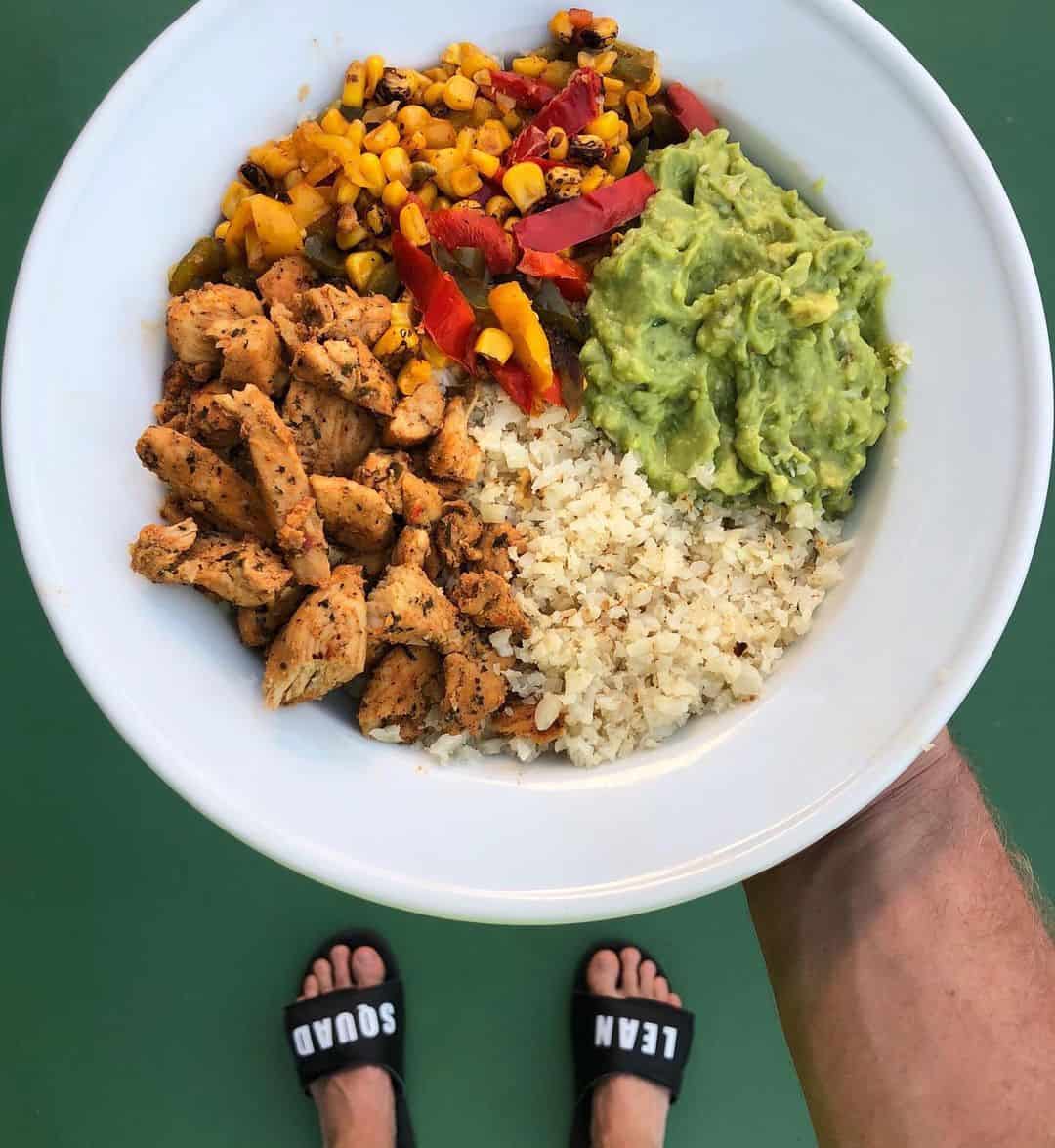
The best bikini competition foods are lean, whole, and nutrient-dense across all three macronutrient categories. Protein sources anchor every meal: chicken breast delivers 23 grams of protein per 3-ounce (85g) serving, white fish delivers 22 grams, egg whites deliver 26 grams per cup, and lean turkey delivers 25 grams per 3-ounce serving.
Complex carbohydrate staples are sweet potatoes, brown rice, oatmeal, and quinoa. These digest slowly, sustain energy between meals, and avoid the blood sugar spikes that drive fat storage. Pre-workout servings of complex carbs are standard protocol. Post-workout, a small amount of fruit or a rice cake provides quick glycogen replenishment.
Healthy fat sources are limited in quantity but not eliminated. Avocado (one-quarter fruit per serving), raw nuts (1 oz / 28g portion), olive oil (1 tablespoon), and chia seeds (1 tablespoon) provide essential fatty acids. Foods to avoid throughout prep include refined sugar, processed snacks, excess sodium, and alcohol, all of which increase water retention and slow fat loss.
Best Foods by Category:
- Protein: chicken breast, white fish, egg whites, lean turkey, tofu
- Carbs: sweet potatoes, brown rice, oatmeal, quinoa, berries
- Fats: avocado, almonds, olive oil, chia seeds, pumpkin seeds
- Vegetables: broccoli, spinach, Brussels sprouts, mixed greens
What Are the Benefits of a Bikini Competition Diet?
A properly structured bikini competition diet delivers fat loss, muscle definition, and sustained energy simultaneously. The high protein intake protects lean tissue while the caloric deficit drives fat reduction. The result is lower body fat paired with visible muscle tone rather than the flat, depleted look that extreme restriction produces.
Beyond body composition, the structured meal frequency stabilizes blood sugar throughout the day. Five to six evenly spaced meals prevent energy crashes and reduce cravings. Competitors consistently report improved focus and consistent training performance compared to irregular eating patterns.
Does Meal Timing Matter for Bikini Prep?
Yes. Meal timing does affect both body composition and training performance during bikini prep. Distributing five to six meals evenly throughout the day keeps the body consistently fueled and reduces fat storage. Extended gaps between meals allow blood sugar to drop, increasing cortisol, which promotes fat storage and muscle breakdown.
Pre-workout nutrition is particularly important. A meal containing complex carbs and moderate protein 60-90 minutes before training ensures muscle glycogen is topped up for performance. Post-workout, a fast-absorbing carb plus protein source within 30-45 minutes accelerates muscle glycogen replenishment and starts the recovery process.
Carb cycling is an advanced timing strategy used in the final weeks. High-carb days refuel muscle glycogen on heavy training days. Low-carb days accelerate fat oxidation on rest or light cardio days. This keeps metabolism from adapting to a fixed calorie intake while continuing to drive fat loss toward competition.
What Are the Biggest Mistakes in a Bikini Competition Diet?
The most damaging mistake in bikini prep is cutting calories too aggressively too early in the process. Severe restriction triggers muscle catabolism, slows resting metabolic rate, and depletes the training energy needed to preserve the physique being built. A moderate deficit of 200-500 calories per day produces better stage-ready results than a crash approach that burns muscle alongside fat.
Other common errors include skipping meals, not drinking enough water, over-relying on supplements instead of whole food, and obsessing over daily weight fluctuations. Water retention from hormonal cycles, sodium, and training stress creates normal daily weight variation of 1-3 lbs (0.5-1.4 kg). Judging progress by daily weigh-ins rather than weekly averages and body measurements leads to unnecessary diet changes that disrupt steady fat loss.
Is Cutting Calories Too Low a Common Bikini Prep Mistake?
Yes. Cutting calories too low is the most widespread mistake among first-time bikini competitors. Dropping intake below 1,200 calories while training intensely creates a caloric deficit too large for the body to manage without sacrificing muscle tissue. Muscle loss reduces the definition that bikini judging rewards, directly working against the goal.
Prep coaches consistently advise starting the deficit conservatively. If maintenance is 2,000 calories, a starting deficit of 300 calories puts daily intake at 1,700. Progress is tracked over two to three weeks. Only if fat loss stalls does a further reduction of 100-200 calories get applied. This stepwise approach preserves metabolic rate throughout the full 12-week timeline.
Heavy weight training must continue even during the caloric deficit. A common error is switching entirely to circuit training for ‘toning’ during the cut phase. This is counterproductive: heavy compound lifts send the signal to retain muscle even in a deficit. Removing them accelerates lean tissue loss.
Should You Eliminate Carbs During Bikini Prep?
No. Carbohydrates should not be eliminated during bikini competition prep. Complex carbohydrates are the primary fuel source for the high-intensity training that builds and maintains the muscle required for stage condition. Removing them entirely collapses training performance, reduces muscle fullness, and impairs recovery between sessions.
The body tolerates lower carb intake better than low fat intake during a prep, but neither should be eliminated. Fats must stay above 20% of total calories to protect hormonal function. Carbs are reduced progressively as competition approaches, not removed. The final one to two weeks before a show may involve strategic carb depletion followed by a carb load to fill muscles and create stage-ready fullness.
The right approach is carb management, not carb elimination. Complex carbs are timed around training. Simple carbs are reserved for post-workout recovery windows. Refined carbs and sugar are removed throughout prep. This structure keeps energy and performance intact while still driving the fat loss that competition prep demands.
What Results Can You Expect From a Bikini Competition Diet?
A 12-week bikini competition diet produces measurable fat loss, improved muscle definition, and consistent training energy when properly structured. Competitors following a moderate 200-500 calorie daily deficit lose 0.5-1 lb (0.2-0.5 kg) of fat per week. Over 12 weeks, that produces 6-12 lbs (2.7-5.4 kg) of fat loss while preserving or improving muscle tone.
The visible changes follow a predictable sequence. The first two weeks deliver reduced bloating and improved energy from cleaner food quality. Weeks three through six show noticeable changes in muscle definition as body fat percentage drops. The final phase concentrates on revealing the muscle built during prep by pushing to the lower body fat threshold required for stage condition.
For non-competitors applying the principles without the extreme final phase, results include a leaner body composition, better training performance, and stable energy throughout the day. Our team at Optimal Weight Plan works with clients to apply structured nutrition principles at a sustainable pace, producing lasting fat loss without the metabolic stress of extreme competition prep.
Typical 12-Week Results Timeline:
| Phase | Weeks | Expected Change |
|---|---|---|
| Phase 1 | 1-4 | Reduced bloating, improved energy, initial 2-4 lbs (0.9-1.8 kg) fat loss |
| Phase 2 | 5-8 | Visible muscle definition, consistent weekly fat loss of 0.5-1 lb (0.2-0.5 kg) |
| Phase 3 | 9-12 | Maximum definition, final fat loss push, stage-ready physique |
How Long Does a Bikini Competition Diet Take to Show Results?
A bikini competition diet produces visible results within two to four weeks when calories and macros are set correctly. The first week typically shows reduced bloating and water retention from eliminating processed food and excess sodium. Body composition changes, meaning actual fat loss with muscle retention, become visible from week three onward as the deficit accumulates.
The full transformation to stage condition takes 12 weeks for most women starting with a solid training base. Women new to structured eating may need 16-20 weeks to reach the same point. The timeline depends on starting body fat percentage, training history, and adherence to the nutrition protocol.
Tracking progress accurately requires weekly photos, waist and hip measurements, and weekly average weight rather than daily weigh-ins. Body weight fluctuates by 1-3 lbs (0.5-1.4 kg) daily from water, food volume, and hormonal cycles. Weekly averages reveal the actual fat loss trend that daily numbers obscure.
Want Your Free Weight Loss Action Plan From Our OPTAVIA Coaches?
You know the structure. You know the macros. You know the mistakes to avoid. What you need now is a plan built specifically for your body, your timeline, and your life. Our Independent OPTAVIA Coaches at Optimal Weight Plan put together a free, personalized action plan that gives you the structure competition prep coaches use, adapted for sustainable, lasting results. No guesswork. No extreme restriction. Just a clear protocol built for you. Get your free plan now and start this week.
What Does a Personalized Weight Loss Plan Include?
A personalized weight loss plan delivers the same precision as competition prep nutrition without the extreme demands of stage prep. It starts with your current calorie intake, establishes a sustainable deficit, sets protein targets based on your lean body mass, and structures meals around your training schedule and daily routine.
Our coaches at Optimal Weight Plan build each plan around your actual food preferences, activity level, and health history. The result is a structured weight loss program you can follow consistently without the metabolic stress that crash dieting creates. Consistency is the real driver of results, and a plan you can stick to beats a perfect plan you can’t follow.
Our Top Pick
Clean Eatz Kitchen Weight Loss Meal Plan
Chef-prepared, portion-controlled meals designed for real weight loss results. No cooking required. No calorie counting. Just fresh food that works.
View on Amazon