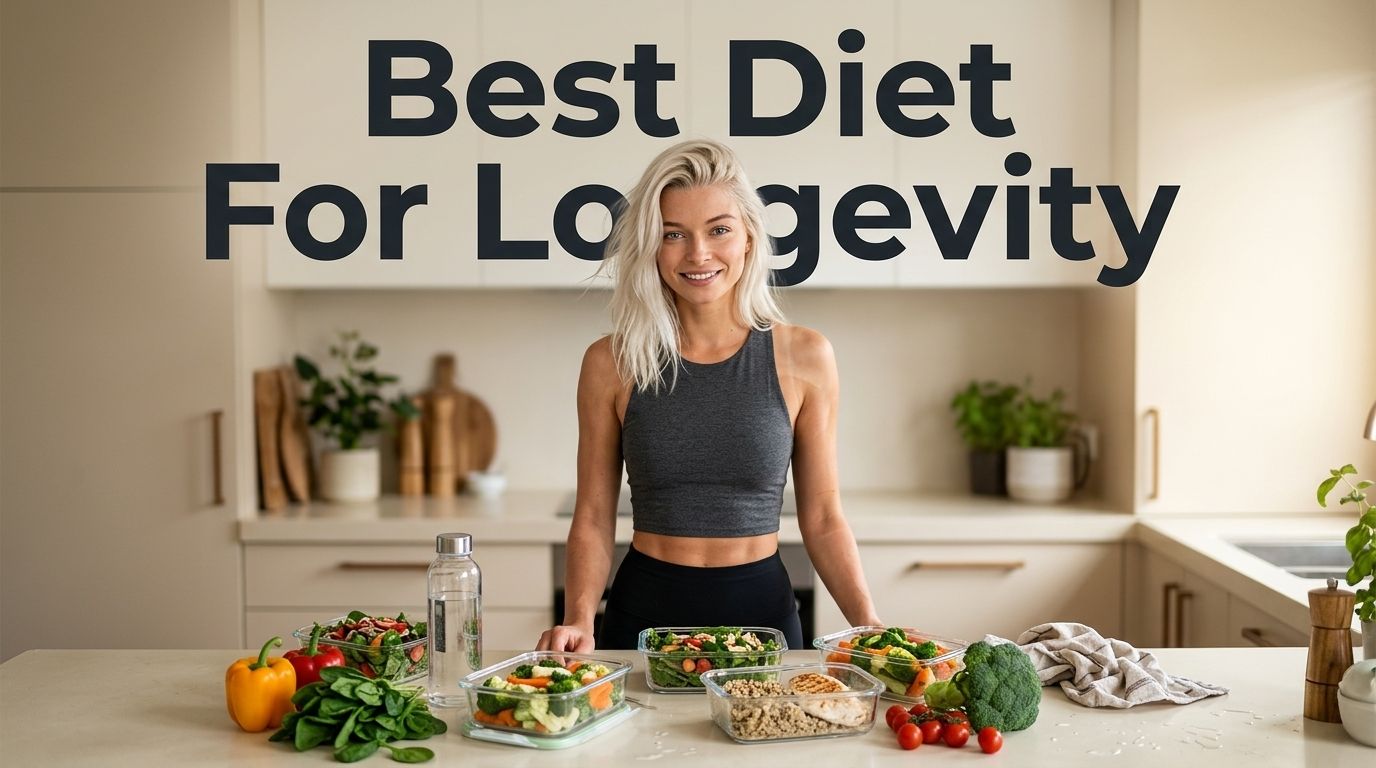
The best diet for longevity is a flexible, plant-rich pattern, not a single rigid plan. Research from Harvard T.H. Chan School of Public Health links whole, minimally processed plant foods to lower chronic disease risk. No formula required.
Longevity diets worldwide share five core principles: high legume intake, abundant leafy greens, nuts and healthy fats, limited red and processed meat, and minimal added sugar. Mediterranean and Okinawan patterns lead all evidence rankings. Science confirms that dietary change at any age still adds measurable years to lifespan.
This guide covers the top diet patterns, the best foods to eat, foods that shorten lifespan, the role of fasting, and what the strongest research studies actually say. Everything you need to build a longevity diet that works for your age and goals is here.
What Is the Best Diet for Longevity?
The best diet for longevity is a flexible, plant-rich eating pattern. No rigid formula defines it. Harvard T.H. Chan School of Public Health research connects whole, minimally processed plant foods to lower chronic disease risk and longer life expectancy. The pattern centers on legumes, nuts, whole grains, and abundant vegetables from diverse food traditions.
Here’s the thing: four very different healthy eating patterns from a 30-year Harvard study all link to a 20% lower risk of early death. These patterns share key features. High plant food intake, low red and processed meat, limited ultra-processed foods. Whole grains, fruits, vegetables, nuts, and legumes are the consistent common threads.
A PLOS Medicine study put numbers to it. Men who adopted an optimal diet in young adulthood gained an estimated 13 years. Women gained approximately 10.7 years. Dietary change at age 60 still adds roughly 8 more years. And at age 80, it still contributes 3 additional years. It’s never too late to start.
What Do Longevity Diets Have in Common?
Longevity diets worldwide share a core set of plant-based dietary principles. The Mediterranean, Okinawan, Nordic, and DASH diets all emphasize nutrient-dense plant foods. These patterns consistently limit red and processed meats, added sugars, and ultra-processed foods. High intake of whole grains, legumes, vegetables, and healthy fats ties every pattern together.
Shared Principles Across Longevity Diets:
- High intake of legumes, whole grains, and vegetables
- Abundant healthy fats from nuts, seeds, and olive oil
- Limited red meat and processed meat
- Minimal added sugar and ultra-processed foods
- Regular inclusion of herbs, spices, and polyphenol-rich foods
And here is the best part: polyphenol-rich plant foods show up in all of them. Fruits, vegetables, herbs, spices, and legumes supply these protective compounds. Polyphenols reduce inflammation and oxidative stress, two primary drivers of cellular aging. Regular intake associates with lower rates of cardiovascular disease, cancer, and neurodegeneration.
What Does Blue Zones Research Say About Diet?
Blue Zones research identifies five regions where people commonly live past 100. These zones span Sardinia in Italy, Okinawa in Japan, Loma Linda in California, Nicoya in Costa Rica, and Ikaria in Greece. Despite geographic separation, all five populations follow remarkably similar eating habits. Plant foods, legumes, and whole grains dominate every plate.
What do they all eat? Beans. Consistently. Populations consume legumes as their primary protein source. Meat appears sparingly, roughly 5 times per month in small portions of 85 to 113 grams (3 to 4 oz). This low-meat pattern correlates directly with lower heart disease rates and extended lifespan across every zone studied.
What Are the Top Longevity Diet Patterns?
The top longevity diet patterns share a clear foundation in whole, minimally processed plant foods. The Mediterranean, Okinawan, Valter Longo, MIND, and DASH diets each rank consistently in longevity research. All limit ultra-processed foods, red meat, and added sugar. High vegetable, legume, and whole grain intake is the common denominator across every pattern.
Bottom line: combining any of these patterns with other healthy lifestyle factors amplifies the benefit. Research from the Journal of Internal Medicine estimates that a healthy diet paired with exercise, no smoking, and healthy weight can extend disease-free life expectancy by 8 to 10 years. Diet alone accounts for a substantial portion of that gain.
Top Longevity Diet Patterns:
- Mediterranean Diet — olive oil, vegetables, legumes, seafood, limited red meat
- Okinawan Diet — purple sweet potatoes, soy, bitter melon, seafood, ‘hara hachi bu’ principle
- Valter Longo Longevity Diet — pescatarian, low protein under 65, fasting-mimicking cycles
- MIND Diet — leafy greens, berries, nuts, whole grains, fish, limited saturated fat
- DASH Diet — fruits, vegetables, low-fat dairy, whole grains, limited sodium and sugar
Is the Mediterranean Diet Good for Longevity?
Yes. The Mediterranean diet is one of the most studied longevity eating patterns globally. It centers on abundant fruits, vegetables, whole grains, legumes, olive oil, and nuts, with seafood several times weekly. Red meat and sweets appear rarely. Multiple large-scale studies link consistent adherence to longer telomere length and significantly lower mortality risk.
Telomere length. Does it matter? Absolutely. Longer telomeres correlate with greater life expectancy and lower chronic disease risk. Mediterranean diet adherents consistently show longer telomeres than those following Western dietary patterns. The protective effect operates through reduced inflammation and oxidative stress.
Olive oil supplies the diet’s primary fat source. It delivers monounsaturated fatty acids and oleocanthal, a compound with anti-inflammatory properties. Three tablespoons (44 ml) of extra-virgin olive oil per day represents the typical intake among long-lived Mediterranean populations. That same quantity appears in Blue Zones longevity research consistently.
What Is the Okinawan Diet?
The Okinawan diet is a calorie-restricted, plant-centered traditional Japanese eating pattern. Purple sweet potatoes serve as the primary carbohydrate source. Bitter melon, soy foods, Jasmine tea, and seafood are central foods. Red meat, dairy, and eggs appear rarely. Okinawa has historically recorded the highest centenarian concentration per capita on Earth.
Here’s what makes it work: the ‘hara hachi bu’ principle. This Confucian teaching instructs eating until 80% full, naturally limiting calorie intake without deliberate restriction. Lower calorie intake reduces oxidative stress and slows cellular aging. Research confirms calorie restriction extends healthspan across multiple species.
What Is the Valter Longo Longevity Diet?
The Valter Longo Longevity Diet is a science-backed framework designed to extend healthy lifespan. USC Gerontology professor Valter Longo developed it from research on the world’s longest-lived populations. The pattern is pescatarian, high in complex carbohydrates, and low in protein for adults under 65. Legumes supply the main protein.
Protein intake targets are specific by age. Adults under 65 target 0.31 to 0.36 grams per pound (0.68 to 0.79 grams per kilogram) of body weight daily. Adults over 65 increase intake slightly to preserve muscle mass. Legumes, chickpeas, green peas, and beans serve as the primary protein sources at every age stage.
And this is where it gets interesting: periodic fasting-mimicking cycles. Longo recommends a 5-day low-calorie fasting cycle two to four times per year. This cycle reduces mTOR signaling, activates autophagy, and promotes cellular regeneration. Clinical trials show measurable reductions in biomarkers of aging and disease risk after each cycle.
What Foods Should You Eat for Longevity?
The foods most linked to longevity are whole, minimally processed plants and quality proteins. Legumes, whole grains, leafy greens, nuts, seeds, berries, and fatty fish top every evidence-based list. These foods supply fiber, antioxidants, polyphenols, and omega-3 fatty acids. Regular intake reduces inflammation and chronic disease risk significantly.
Let me break that down: leafy greens are the place to start. They supply folate, carotenoids lutein and zeaxanthin, and vitamin K. Regular salad consumption reduces calorie intake at meals and links to lower rates of heart attack, stroke, and cancer. Kale, spinach, collard greens, and mustard greens are among the most nutrient-dense options available.
Tomatoes are another standout. They deliver lycopene, vitamins C and E, beta-carotene, and flavanol antioxidants. Cooked tomato sauce contains 10 times the bioavailable lycopene of raw tomatoes. And consuming them with healthy fats like olive oil or nuts increases carotenoid absorption significantly.
What Are the Best Plant Foods for a Long Life?
The best plant foods for longevity are legumes, leafy greens, nuts, berries, and whole grains. Legumes lead all plant categories in the evidence. Eating beans, lentils, or peas at least twice per week reduces colon cancer risk by 50% according to published research. Nuts consumed daily in 1-ounce (28 g) portions reduce cardiovascular mortality.
Beans are the king of longevity foods. They stabilize blood sugar, reduce appetite, and supply soluble fiber that lowers cholesterol. Resistant starch in beans ferments in the gut and produces short-chain fatty acids. These compounds protect against colon cancer and actively support the gut microbiome.
Top Longevity Plant Foods:
- Legumes — beans, lentils, chickpeas, green peas, black beans
- Leafy greens — kale, spinach, collard greens, mustard greens, romaine
- Nuts and seeds — walnuts, almonds, flaxseed, chia seeds
- Whole grains — oats, barley, brown rice, quinoa, whole wheat
- Berries — blueberries, strawberries, blackberries
- Cruciferous vegetables — broccoli, cauliflower, Brussels sprouts
How Much Protein Does a Longevity Diet Need?
A longevity diet requires moderate protein intake carefully calibrated to age. Adults under 65 target 0.31 to 0.36 grams per pound (0.68 to 0.79 grams per kilogram) of body weight daily. High protein intake in midlife elevates mTOR signaling, a pathway linked to accelerated cellular aging. Legumes supply the preferred protein source.
Past 65, the calculus shifts. Adults over 65 require a modest protein increase to prevent muscle loss and sarcopenia. Fish, eggs, and poultry in small portions become more appropriate after age 65. Goat and sheep dairy products are also well tolerated at this stage. The goal shifts from minimizing protein to maintaining sufficient intake for muscle preservation.
Protein Targets by Age (Longevity Diet Framework):
| Age Group | Daily Target | Primary Sources |
|---|---|---|
| Under 65 | 0.31–0.36 g/lb (0.68–0.79 g/kg) | Legumes, beans, peas |
| Over 65 | Slightly increased | Fish, eggs, white meat, legumes |
What Foods Shorten Lifespan?
The foods most linked to shorter lifespan are ultra-processed products, red meat, and added sugar. The PLOS Medicine study identifies these three as having the largest negative longevity impact. Ultra-processed foods include packaged snacks, sodas, and processed meats. All three categories drive chronic inflammation and accelerate cellular aging.
Red and processed meat consumption links consistently to elevated cancer and cardiovascular disease risk. A 2022 study confirmed that reducing these meats produces the largest single dietary gain in life expectancy. Replacing them with beans, lentils, and chickpeas delivers measurable longevity benefit without sacrificing protein.
Foods to Limit for Longevity:
- Sugar-sweetened beverages — sodas, energy drinks, sweetened juices
- Processed and red meats — deli meats, bacon, hot dogs, red meat above small portions
- Refined grains — white bread, white rice, processed cereals
- Ultra-processed packaged snacks — chips, cookies, crackers with long ingredient lists
- Trans fats and highly refined seed oils in fried and fast foods
Does Sugar Harm Longevity?
Yes. Added sugar directly harms longevity through multiple biological mechanisms. Sugar-sweetened beverages rank among the top three foods linked to reduced lifespan in the PLOS Medicine study. Excess sugar drives insulin resistance and systemic inflammation. Both mechanisms accelerate telomere shortening and biological aging.
Refined grains work the same way. White bread, white rice, and processed cereals spike blood glucose rapidly. Repeated glucose spikes elevate insulin levels and promote fat storage. Swapping refined grains for whole grain versions reduces fasting insulin and all-cause mortality risk over time.
Does Fasting Extend Lifespan?
Yes. Fasting extends lifespan markers through multiple cellular repair pathways. Periodic fasting activates autophagy, the cellular process of clearing damaged proteins and organelles. Autophagy declines naturally with age. Its reduction links to neurodegenerative disease, cancer, and accelerated biological aging in research models.
So what does that mean for you? Lower IGF-1 from periodic fasting shifts the body toward maintenance and repair mode. Elevated IGF-1 in midlife associates with increased cancer risk and accelerated aging. This cellular shift underlies much of fasting’s longevity benefit in clinical research.
Common Fasting Approaches in Longevity Research:
- Time-restricted eating — eating within a 6–8 hour daily window
- 5:2 intermittent fasting — 5 normal eating days, 2 low-calorie days of about 500 calories per week
- Fasting-mimicking diet (Longo) — 5-day low-calorie cycle, 2–4 times per year
- Calorie restriction — sustained 10–15% below maintenance long-term
How Does Calorie Restriction Affect Aging?
Calorie restriction slows aging by reducing metabolic rate and oxidative stress throughout the body. Consuming fewer calories while maintaining nutritional adequacy reduces oxidative damage to DNA, proteins, and cell membranes. Research in animal models shows consistent lifespan extension of 30% to 50% under moderate calorie restriction.
In plain English: staying lean throughout life mirrors the same biological benefit. Harvard research links weight gain from early to middle adulthood to elevated risks of cardiovascular disease, cancer, and diabetes. Avoiding excess body fat delivers comparable metabolic protection without formal calorie counting.
Stopping eating at 80% full, the Okinawan ‘hara hachi bu’ practice, achieves natural calorie reduction without tracking. Okinawan populations who follow this consume approximately 11% fewer calories than satiety demands. This sustained mild deficit reduces mTOR activity and promotes cellular maintenance pathways.
What Does Science Say About Diet and Longevity?
The science on diet and longevity consistently supports plant-rich patterns and lifestyle combinations. Multiple landmark studies confirm that dietary quality outpredicts most other controllable longevity factors. Harvard, USC, and the Journal of Internal Medicine all reach the same conclusion: diet pattern matters more than any single nutrient.
And the numbers back that up. Combining healthy diet with non-smoking, regular exercise, healthy weight, and moderate alcohol adds 8 to 10 disease-free years to life expectancy. This comes from the Journal of Internal Medicine review of large cohort studies. Diet contributes the single largest modifiable share of that gain.
What Research Studies Support Longevity Diets?
The strongest research support for longevity diets comes from two landmark Harvard cohort studies. Researchers followed 75,230 women for 36 years and 44,085 men for 34 years. All four tested healthy eating patterns linked to a 20% reduction in early death risk. Cancer, cardiovascular, and neurodegenerative mortality all decreased significantly.
A separate PLOS Medicine study quantified the actual life expectancy gain from dietary changes. Men who adopted an optimal diet in young adulthood gained an estimated 13 years. Women gained approximately 10.7 years. Dietary change at age 60 still added 8 years. Even at age 80, it contributed 3 additional years of life.
Key Longevity Diet Research Studies:
| Study | Participants | Key Finding |
|---|---|---|
| Harvard Nurses’ Health + HPFS | 119,315 over 34–36 years | 20% lower early death risk from 4 healthy diet patterns |
| PLOS Medicine (Fadnes et al.) | Population modeling | Optimal diet adds up to 13 years of life from young adulthood |
| Journal of Internal Medicine (2023) | Cohort narrative review | Healthy diet and lifestyle adds 8–10 disease-free years |
Want Your Free Longevity Diet Action Plan from Our OPTAVIA Coaches?
You’ve got the science. Now you need the plan. A free Optimal Weight Plan longevity action plan gives you a structured protocol from Independent OPTAVIA Coaches. The guide maps the exact dietary shifts research links to extended healthy lifespan. Food lists, meal frameworks, and a calorie balance approach built on Mediterranean and Longevity Diet principles. All in one place.
Our coaches at Optimal Weight Plan translate longevity nutrition into actionable weekly steps. Plant food targets. Protein calibration by age. Structured fasting periods. No guesswork. A personalized approach built on the same principles Blue Zones populations follow naturally. If you’re looking for a structured weight loss program grounded in real longevity science, this is it. Don’t guess your way to a longer life.
What Does the Optimal Weight Plan Longevity Guide Include?
The Optimal Weight Plan longevity guide includes food lists, protein targets, and fasting schedules. Week-by-week meal structures replace vague advice with specific targets. Our Independent OPTAVIA Coaches provide direct guidance and accountability throughout. The guide adapts to individual food preferences, health history, and age.
It’s free. It’s delivered directly to your inbox. You receive the same evidence-based longevity framework our team at Optimal Weight Plan uses with clients pursuing long-term health outcomes. Start today and have your personalized longevity roadmap within 24 hours.