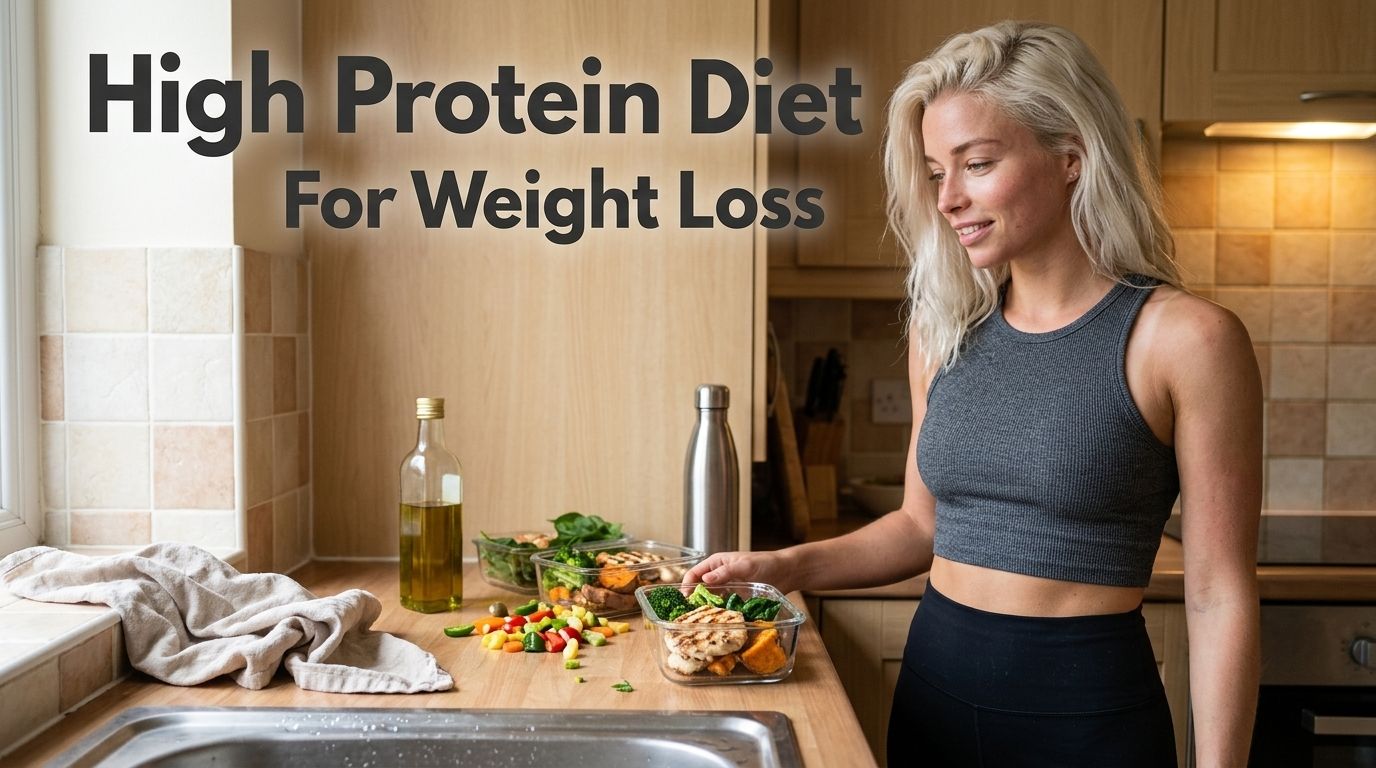
A high-protein diet for weight loss increases daily protein intake to 30 percent or more of total calories, supporting satiety, muscle retention, and fat loss. It works for most healthy adults when protein sources are lean and nutrient-dense.
Protein keeps you fuller longer, burns more calories during digestion, and preserves lean muscle while body fat drops. The recommended target is 1.2 to 1.5 grams of protein per kilogram (0.55 to 0.68g per pound) of body weight daily. Food sources span lean meats, fish, eggs, legumes, and low-fat dairy.
This guide covers how a high-protein diet drives weight loss, which foods to prioritize, how much to eat daily, and what risks to watch for. Our coaches at Optimal Weight Plan outline a practical starting framework below.
What Is a High-Protein Diet for Weight Loss?
A high-protein diet for weight loss is a structured eating plan where protein supplies 30 percent or more of daily calories. The standard dietary reference intake for protein sits at 0.8 grams per kilogram (0.36g per pound) of body weight. A high-protein approach doubles or nearly doubles that baseline, targeting 1.2 to 1.5 grams per kilogram (0.55 to 0.68g per pound) per day.
The approach does not require eliminating carbohydrates or fat. A high-protein diet shifts the macronutrient ratio by increasing protein while maintaining moderate intakes of complex carbs and healthy fats. The 90-30-50 method, for example, targets 90 grams of protein, 30 grams of fiber, and 50 grams of healthy fats daily.
High-protein diets span a range of structured programs. The Mayo Clinic Diet Higher Protein meal plan delivers approximately 95 grams of protein daily on a 1,200-calorie (5,021 kJ) framework, representing 34 percent of total calories. This sits above the standard reference while remaining nutritionally balanced across all macronutrients.
How Much Protein Should You Eat Daily for Weight Loss?
The effective protein target for weight loss is 1.2 to 1.5 grams per kilogram (0.55 to 0.68g per pound) of body weight per day. A 70-kilogram (154-pound) adult needs 84 to 105 grams of protein daily at this range. This intake consistently outperforms the baseline 0.8g/kg reference for satiety, muscle retention, and total fat loss in clinical studies.
Distributing protein evenly across meals amplifies its satiety effect. Research supports spreading protein intake across three to four meals rather than concentrating it in one. Each meal including 25 to 40 grams of protein maintains a sustained satiety signal through the full day, reducing the appetite spikes that drive between-meal snacking.
Individual needs vary by activity level, age, and body composition goal. Active adults building muscle may target 1.6 to 2.0 grams per kilogram (0.73 to 0.91g per pound). Adults over 50 face accelerated muscle loss and benefit from intakes at the higher end of the 1.2 to 1.5 range to preserve lean mass during a calorie deficit.
What Qualifies as a High-Protein Diet Plan?
A diet plan qualifies as high-protein when protein contributes approximately 30 percent or more of total daily calorie intake. On a 1,500-calorie (6,276 kJ) daily plan, this equals 112 grams of protein per day. Standard Western diets average 15 to 17 percent of calories from protein, making the high-protein threshold roughly double the population average.
The label ‘high-protein’ does not require specific foods or the elimination of food groups. Popular high-protein plans include Atkins, the Zone Diet, Paleo, and medically structured programs like the Mayo Clinic Higher Protein plan. Each varies in its carbohydrate and fat approach while sharing the central feature of elevated protein intake.
A sustainable high-protein diet integrates variety across protein sources. Relying exclusively on animal protein raises saturated fat intake and reduces dietary fiber. Plans that include legumes, eggs, low-fat dairy, and fish alongside lean meat deliver higher protein with a broader micronutrient and fiber profile than meat-only approaches.
How Does a High-Protein Diet Help You Lose Weight?
A high-protein diet drives weight loss through three distinct mechanisms: increased satiety, elevated thermogenesis, and preserved lean muscle mass. These mechanisms operate simultaneously and reinforce each other. Higher satiety reduces calorie intake. Higher thermogenesis increases calorie expenditure. Preserved muscle maintains metabolic rate as weight drops.
Clinical research supports the efficacy. Multiple controlled studies show that high-protein diets produce greater short-term weight loss than standard calorie-restricted diets at equivalent calorie targets. The advantage comes from protein’s superior effect on appetite hormones, not simply from eating fewer calories.
The long-term limitation is adherence. Sustained high-protein intake requires consistent food planning. Returning to low-protein, high-calorie eating after a high-protein period produces weight regain at rates similar to other restrictive diets. Sustainability of the food pattern determines long-term outcome more than the protein target itself.
Does Protein Reduce Hunger and Cravings?
Yes. Protein reduces hunger by suppressing ghrelin and elevating satiety hormones including peptide YY and GLP-1. Ghrelin is the primary hunger-signaling hormone. High-protein meals suppress ghrelin more effectively than high-carbohydrate or high-fat meals at equivalent calorie levels. The satiety effect keeps appetite suppressed for two to four hours after each meal.
The appetite-suppressing effect is strongest when protein is distributed across meals. A breakfast with 30 grams of protein produces measurably lower appetite at lunch than a low-protein breakfast of equivalent calories. Both the Mayo Clinic program and WeightWatchers cite protein distribution across meals as the primary driver of reduced between-meal cravings.
Protein also reduces the reward response to high-calorie foods. Research shows that higher daily protein intake decreases late-night snacking frequency and reduces cravings for calorie-dense sweets and processed foods. This behavioral effect compounds the hormonal satiety mechanism, producing lower total daily calorie intake without active restriction.
Does a High-Protein Diet Boost Metabolism?
Yes. Protein carries the highest thermic effect of food at 20 to 35 percent of its caloric content. Carbohydrates carry a thermic effect of 5 to 10 percent and fat 0 to 3 percent. A 400-calorie (1,674 kJ) high-protein meal expends 80 to 140 calories (335 to 586 kJ) in digestion. A 400-calorie high-fat meal expends only 0 to 12 calories (0 to 50 kJ) in digestion.
This thermogenic difference creates a meaningful daily calorie gap. Replacing carbohydrate or fat calories with protein calories at equal total intake produces a net reduction in absorbed energy. Over a full day at 30 percent protein intake, the thermic advantage adds up to an effective daily expenditure increase of 80 to 100 calories (335 to 418 kJ) compared to a standard-protein diet.
Protein also preserves resting metabolic rate during weight loss. Calorie-restricted diets without adequate protein cause muscle loss, and muscle is metabolically active tissue. Each kilogram of lost muscle reduces resting metabolic rate by approximately 13 calories (54 kJ) per day. High-protein diets prevent this metabolic slowdown by signaling muscle protein synthesis even during a calorie deficit.
What Are the Benefits of a High-Protein Diet?
A high-protein diet delivers benefits across weight loss, body composition, metabolic health, and physical performance. The primary benefit is greater fat loss with less muscle loss compared to standard calorie-restricted diets. Secondary benefits include improved blood sugar stability, reduced appetite, and faster recovery from physical activity.
Protein promotes muscle repair and regeneration after exercise. The optimal post-workout window for protein intake is approximately one hour after training. A protein-rich snack during this window supports faster muscle recovery, reduced soreness, and readiness for the next session. This matters for weight loss because consistent exercise is a key driver of long-term fat maintenance.
High-protein diets improve body composition independently of weight loss. Studies show that adults following high-protein diets at the same calorie level as control groups lose more body fat and gain or maintain more lean muscle. The result is a lower body fat percentage even when total weight loss is equivalent, producing a leaner physique alongside the scale change.
Key benefits of a high-protein diet:
- Greater fat loss with less muscle loss compared to standard calorie restriction
- Reduced appetite and fewer cravings through ghrelin suppression
- Higher daily calorie burn from elevated thermic effect of food
- Preserved resting metabolic rate during and after weight loss
- Faster muscle recovery after exercise
- Improved blood sugar stability between meals
Does Eating More Protein Preserve Muscle While Losing Fat?
Yes. Adequate protein intake preserves lean muscle mass during a calorie deficit by stimulating muscle protein synthesis. Muscle protein synthesis requires a consistent dietary amino acid supply. When calories drop but protein remains high, the body draws fat stores for energy rather than breaking down muscle tissue. This preservation directly protects resting metabolic rate during weight loss.
The evidence is clear in clinical comparisons. Adults on calorie-restricted diets with 1.2 to 1.6 grams of protein per kilogram (0.55 to 0.73g per pound) retain significantly more lean mass than those at the 0.8g/kg baseline during equivalent periods of fat loss. The difference compounds over time, producing a faster and healthier metabolic recovery after the diet ends.
Older adults benefit most from high protein intake during weight loss. Muscle loss accelerates after age 50 due to anabolic resistance, a reduced sensitivity of muscle tissue to protein synthesis signals. Higher protein intake partially compensates for this resistance. Intakes of 1.5 grams per kilogram (0.68g per pound) or more are recommended for adults over 50 following structured weight loss programs.
Can a High-Protein Diet Improve Long-Term Weight Maintenance?
Yes. Higher protein intake supports long-term weight maintenance by preserving muscle mass and sustaining a higher resting metabolic rate. Most weight regain after dieting is driven by metabolic adaptation, the reduction in resting calorie burn caused by lost muscle. High-protein diets reduce this adaptation, leaving the metabolism closer to its pre-diet baseline after weight loss ends.
Studies on post-diet maintenance show that high-protein dieters regain less weight over 12 to 24 months than standard-protein dieters who lost the same amount of weight. The mechanism is muscle preservation during the diet. More retained muscle at the end of the diet means a higher resting metabolic rate and more calories burned at rest going forward.
Behavioral factors also support maintenance. The appetite-suppressing effect of protein does not fully disappear when the active diet phase ends. Adults who maintain higher protein intakes as a permanent dietary habit sustain lower baseline appetite levels. This reduces the calorie drift that produces gradual weight regain in most post-diet adults.
What Foods Should You Eat on a High-Protein Diet?
The best foods for a high-protein diet are lean, nutrient-dense protein sources with low saturated fat and moderate calorie density. Lean meats, fish, eggs, legumes, low-fat dairy, and soy-based foods cover the full range of essential amino acids while avoiding the saturated fat and calorie load of processed or fatty cuts. Variety across sources ensures complete amino acid coverage.
Protein quality matters alongside quantity. Complete proteins containing all nine essential amino acids include animal sources such as chicken, fish, eggs, and dairy. Plant sources such as soy, quinoa, and edamame are also complete. Incomplete plant proteins such as rice, lentils, or nuts become complete when combined across the day.
Processed meats are the category to avoid. Bacon, deli meats, sausages, and hot dogs deliver protein alongside high sodium, preservatives, and saturated fat. The cardiovascular risk from processed meat consumption is well-documented. Replacing processed meats with skinless poultry, fish, eggs, or legumes achieves the same protein target with a dramatically lower health risk profile.
What Are the Best Animal-Based Protein Sources for Weight Loss?
The best animal-based protein sources are skinless poultry, fish, eggs, and low-fat dairy for their high protein-to-calorie ratio. Skinless chicken and turkey breast deliver 25 to 30 grams of protein per 100 grams (3.5 oz) at under 165 calories (690 kJ). Fatty fish like salmon delivers comparable protein with the added benefit of omega-3 fatty acids that support metabolic health.
Lean red meat qualifies on a high-protein diet when selected carefully. Cuts labeled ‘loin’ or ’round’ contain less than 10 grams of fat, 4.5 grams or fewer of saturated fat, and less than 95 milligrams of cholesterol per 100 grams (3.5 oz). These cuts provide high bioavailability protein without the cardiovascular risk associated with fatty or processed red meat.
Eggs and low-fat dairy are highly accessible complete protein sources. Two large eggs deliver 12 grams of protein at 140 calories (586 kJ). Greek yogurt delivers 15 to 20 grams of protein per 170-gram (6 oz) serving at 100 to 130 calories (418 to 544 kJ). Both sources are fast to prepare and integrate across all meals of the day.
Best animal-based protein sources:
| Source | Protein per 100g (3.5 oz) | Calories per 100g |
| Skinless chicken breast | 31g | 165 cal (690 kJ) |
| Turkey breast | 29g | 135 cal (565 kJ) |
| Salmon | 25g | 208 cal (870 kJ) |
| Tuna (canned in water) | 30g | 116 cal (485 kJ) |
| Eggs (per 2 large) | 12g | 140 cal (586 kJ) |
| Greek yogurt (170g) | 17g | 100 cal (418 kJ) |
What Are the Best Plant-Based Protein Sources for Weight Loss?
The best plant-based protein sources are legumes, soy-based foods, and seeds for their protein density and high fiber content. Lentils deliver 18 grams of protein per cooked cup (240 mL) alongside 16 grams of dietary fiber. The fiber-protein combination produces a satiety effect that rivals animal protein in controlled studies while contributing zero saturated fat.
Soy-based foods including tofu, tempeh, and soy curls are complete proteins with high bioavailability. Tempeh delivers 31 grams of protein per 100 grams (3.5 oz), making it one of the densest plant protein sources available. Fermented soy products like tempeh also support gut microbiome health through probiotic compounds produced during fermentation.
Nuts and seeds contribute protein alongside healthy fats and micronutrients. Hemp seeds deliver 10 grams of protein per 30-gram (1 oz) serving and contain all nine essential amino acids. Pumpkin seeds, almonds, and peanuts deliver 7 to 9 grams of protein per 30-gram (1 oz) serving. These sources serve best as between-meal snacks or meal additions rather than primary protein sources due to their calorie density.
Best plant-based protein sources for weight loss:
- Lentils: 18g protein per cooked cup, 16g fiber
- Tempeh: 31g protein per 100g (3.5 oz)
- Tofu: 10g protein per 100g (3.5 oz)
- Edamame: 17g protein per cup (240 mL)
- Hemp seeds: 10g protein per 30g (1 oz), complete amino acid profile
- Black beans: 15g protein per cooked cup (240 mL)
What Are the Risks of a High-Protein Diet?
A high-protein diet carries health risks when sustained long-term without medical supervision or nutritional balance. The documented risks include reduced dietary fiber intake, elevated LDL cholesterol from high saturated fat protein sources, bad breath, constipation, and increased kidney filtration load. Most risks are avoidable with careful food selection and adequate hydration.
Fiber deficiency is the most common practical risk. High-protein diets that rely heavily on animal sources and reduce carbohydrate foods often dramatically lower dietary fiber. Adults need 25 to 38 grams (0.9 to 1.3 oz) of fiber daily for gut health, bowel regularity, and cardiovascular protection. Replacing some animal protein with legumes and seeds maintains protein intake while restoring fiber levels.
Cardiovascular risk increases when high-protein diets rely on fatty or processed meat. Diets high in saturated fat raise LDL cholesterol and increase heart disease risk. The risk is protein-source-specific, not protein-specific. Choosing skinless poultry, fish, eggs, and plant proteins avoids the cardiovascular concern entirely while hitting the same protein targets.
Is a High-Protein Diet Safe for People With Kidney Disease?
No. Individuals with existing kidney disease should not follow a high-protein diet without direct physician guidance. The kidneys filter the metabolic waste products of protein digestion, including urea and creatinine. In healthy adults, the kidneys adapt to higher protein intakes without lasting damage. In individuals with reduced kidney function, elevated protein intake accelerates the filtration burden and worsens kidney health over time.
The kidney risk is specific to diagnosed chronic kidney disease, not general kidney health. Multiple large meta-analyses confirm that high-protein diets do not cause kidney damage in healthy adults with normal kidney function. The concern applies only to those with pre-existing renal impairment, where the kidneys cannot adequately process increased protein metabolism byproducts.
Individuals with hypertension, diabetes, or a family history of kidney disease should discuss protein targets with a physician before starting. These conditions elevate the baseline risk of kidney function decline. Medical supervision allows protein targets to be set at a level that supports weight loss without exceeding safe processing capacity.
What Are Common Mistakes on a High-Protein Diet?
The most common mistake on a high-protein diet is concentrating all protein in one meal instead of distributing it across the day. Muscle protein synthesis has a ceiling per meal of approximately 25 to 40 grams. Consuming 100 grams of protein in one sitting does not produce four times the benefit of 25 grams. Distributing intake across three to four meals maximizes both satiety and muscle preservation effects.
Neglecting fiber is the second most common mistake. Many high-protein dieters cut carbohydrate foods without replacing the fiber those foods delivered. The result is constipation, gut microbiome disruption, and reduced fullness between meals. Adding legumes, vegetables, and seeds to a high-protein diet resolves both the protein and fiber targets simultaneously.
Staying on a very high-protein, low-carbohydrate approach beyond the recommended short-term window introduces additional risk. High-protein diets are most effective and safest as structured, time-limited protocols or as moderate lifelong eating patterns. Extending extreme high-protein intake indefinitely without medical monitoring is not recommended by any major dietary authority.
How Do You Start a High-Protein Diet Plan?
Starting a high-protein diet requires calculating your personal protein target, identifying qualifying food sources, and building meals around those sources consistently. The starting point is bodyweight in kilograms multiplied by 1.2 to 1.5 to determine daily grams of protein. A 70-kilogram (154-pound) adult starts at 84 to 105 grams of protein daily.
Build the protein target incrementally over one to two weeks rather than all at once. Sudden large increases in protein intake can cause digestive discomfort, bloating, and temporary changes in bowel habits. Increasing protein by 20 to 30 grams per week while maintaining fluid intake gives the digestive system time to adjust and prevents the side effects that cause people to abandon the approach early.
A food diary accelerates the adjustment period. Tracking protein intake for the first two to three weeks identifies consistent gaps in the daily target and reveals which meals are protein-deficient. Breakfast is the most commonly low-protein meal in adults following standard Western diets. Shifting breakfast to include eggs, Greek yogurt, or a protein-rich smoothie corrects the most common gap in a single daily adjustment.
Steps to start a high-protein diet:
- Calculate your target: bodyweight in kg multiplied by 1.2 to 1.5 equals daily grams of protein
- Audit current intake: track protein for three days to identify gaps
- Build a high-protein breakfast first: eggs, Greek yogurt, or cottage cheese
- Add a lean protein source to lunch and dinner: chicken, fish, lentils, or tofu
- Use protein-rich snacks between meals: hemp seeds, edamame, boiled eggs, or low-fat dairy
- Increase protein gradually over two weeks to avoid digestive side effects
- Consult a physician if you have kidney disease, hypertension, or diabetes
Want Your Free High-Protein Weight Loss Plan from Our OPTAVIA Coaches?
You have the protein science. Now you need the structure that makes it stick. Our Independent OPTAVIA Coaches at Optimal Weight Plan put together a full 12-week high-protein weight loss plan built around your daily targets, food preferences, and schedule. Not a generic template. A plan that fits your real life.
Most people know protein matters. But knowing and executing are different. The coaches at Optimal Weight Plan pair the right daily protein targets with a complete meal framework, accountability check-ins, and weekly progress adjustments. That structure is what separates people who lose weight and keep it off from those who restart the same diet six months later.
The free action plan arrives in your inbox at no cost. It includes your protein target, a weekly meal outline, and the exact food combinations our team at Optimal Weight Plan recommends for your goals. Do not leave weight loss to trial and error when a proven protocol is available for free.