A bodybuilding diet structures every meal around muscle growth. High protein intake, calculated calorie targets, and strategic meal timing work together to maximize muscle protein synthesis. The approach cycles between bulking and cutting phases to build mass and reveal definition.
Protein needs for bodybuilders reach 1.6 to 2.2 grams per kilogram (0.73 to 1.0 grams per pound) of body weight daily. Carbohydrates fuel intense training sessions by replenishing muscle glycogen stores. Healthy fats support testosterone production and nutrient absorption. The 40/30/30 macronutrient split serves as the starting framework for most athletes.
The bodybuilding diet balances muscle gain with fat control through precise nutrition and strategic meal timing. This guide covers protein targets, calorie calculations, the best food sources, supplements, risks, and exactly how to build a meal plan for both bulking and cutting phases of training.
What Is a Bodybuilding Diet?
A bodybuilding diet is a structured eating plan for muscle growth. The program pairs high protein intake with calculated calorie targets to support muscle protein synthesis. Here’s the core concept: bodybuilders cycle between bulking phases that build mass and cutting phases that strip body fat while preserving lean tissue.
The diet prioritizes nutrient-dense whole foods across three macronutrient categories. Protein repairs and builds muscle fibers after resistance training. Carbohydrates replenish glycogen stores that fuel intense workouts. And healthy fats? They support hormone production and nutrient absorption.
Most bodybuilding diets follow a 40/30/30 macronutrient ratio: 40% carbohydrates, 30% protein, and 30% fats. Some competitive bodybuilders use a 55-60% carbohydrate, 25-30% protein, and 15-20% fat split depending on training phase and individual metabolic needs.
Common Bodybuilding Macronutrient Splits:
| Approach | Carbohydrates | Protein | Fats |
|---|---|---|---|
| Standard 40/30/30 | 40% | 30% | 30% |
| High-Carb Competitive | 55-60% | 25-30% | 15-20% |
| Low-Carb Cutting | 30% | 40% | 30% |
How Does a Bodybuilding Diet Differ From a Regular Healthy Diet?
A bodybuilding diet demands higher protein and stricter meal timing. Standard healthy diets recommend 0.8 grams of protein per kilogram (0.36 grams per pound) of body weight daily. Bodybuilding diets require 1.6 to 2.2 grams per kilogram (0.73 to 1.0 grams per pound) to maximize muscle protein synthesis.
Meal frequency also separates the two approaches. Standard dietary guidelines suggest three meals per day. But bodybuilding nutrition typically involves five to six smaller meals spaced throughout the day to maintain steady amino acid availability and stable blood sugar levels.
What Are the Bulking and Cutting Phases?
The bulking phase builds muscle through a caloric surplus. Bodybuilders consume 200 to 500 calories above their maintenance level during this period. The surplus provides the extra energy the body needs to construct new muscle fibers after resistance training breaks down existing tissue.
The cutting phase reverses the caloric equation. Bodybuilders reduce calories below maintenance to strip body fat while preserving the muscle mass built during bulking. How long does cutting last? A typical cutting phase runs 12 to 26 weeks and requires careful protein intake to prevent muscle loss during the caloric deficit.
Advanced bodybuilders in the off-season aim to gain 0.25% to 0.5% of body weight per week. Why so conservative? Slower weight gain reduces the amount of fat accumulated during bulking. The slower the gain, the less aggressive the cutting phase needs to be before competition.
Bulking vs Cutting Phase Comparison:
| Factor | Bulking Phase | Cutting Phase |
|---|---|---|
| Calorie Target | 10-20% above maintenance | Below maintenance |
| Weight Change Goal | Gain 0.25-0.5% per week | Lose 0.5-1% per week |
| Duration | Months to years | 12-26 weeks |
| Primary Focus | Muscle growth | Fat loss, muscle preservation |
How Much Protein Does a Bodybuilder Need?
Bodybuilders need 1.6 to 2.2 grams of protein per kilogram daily. A 180-pound (82 kg) bodybuilder requires 131 to 180 grams of protein per day to maximize muscle protein synthesis. Research from Helms et al. (2014) confirms this range as optimal for resistance-trained athletes.
Here’s the thing: protein quality matters as much as quantity. Complete proteins contain all nine essential amino acids needed for muscle repair. Lean meats, fish, eggs, and dairy provide the highest amino acid profiles. Plant-based sources like quinoa, soy, and combined legumes with grains also deliver complete protein.
Protein distribution across meals influences muscle growth rates. Consuming 0.40 to 0.55 grams per kilogram per meal across three to six daily meals optimizes amino acid delivery. Even distribution prevents the waste that occurs when a single meal exceeds the body’s absorption capacity.
What Are the Best Protein Sources for Bodybuilders?
Lean chicken breast delivers 31 grams of protein per 100 grams. Chicken remains the most popular bodybuilding protein source due to its high protein density and low fat content. A single 170-gram (6-ounce) serving provides roughly 53 grams of protein with minimal saturated fat.
Salmon provides dual benefits for bodybuilders. Each 100-gram (3.5-ounce) serving delivers 25 grams of protein alongside omega-3 fatty acids. Why does that matter? Omega-3s reduce post-workout inflammation and support joint health during heavy resistance training cycles.
Eggs rank among the most bioavailable protein sources in any diet. One large egg contains 6 grams of protein with a biological value of 100, the highest rating on the protein quality scale. The yolk provides additional vitamins D and B12 that support energy metabolism.
Top Protein Sources for Bodybuilders:
- Chicken breast: 31 grams protein per 100 grams
- Salmon: 25 grams protein per 100 grams plus omega-3 fatty acids
- Eggs: 6 grams protein per egg with biological value of 100
- Greek yogurt: 10 grams protein per 100 grams
- Lean ground turkey: 27 grams protein per 100 grams
- Cottage cheese: 11 grams protein per 100 grams
How Many Calories Should a Bodybuilder Eat?
Calorie needs depend on training phase and body composition goals. Bulking requires a caloric surplus of 10% to 20% above maintenance calories. Cutting demands a moderate deficit that preserves muscle mass. To put it simply: a 180-pound bodybuilder with moderate activity typically needs 2,800 to 3,200 calories per day during a bulk.
Maintenance calories serve as the baseline for all calculations. Total daily energy expenditure (TDEE) accounts for basal metabolic rate, physical activity, and the thermic effect of food. Online TDEE calculators provide estimates, but bodybuilders refine their numbers by tracking weight changes over two to four weeks.
And this is where it gets interesting: calorie cycling matches intake to training intensity. Higher calorie days align with heavy lifting sessions when glycogen demand peaks. Lower calorie days correspond to rest days or light cardio sessions. The body uses available fuel more efficiently when calorie intake matches energy output.
Does Meal Timing Matter for Muscle Growth?
Yes. Meal timing does influence muscle protein synthesis rates. Consuming protein within two hours after resistance training enhances the muscle repair response. The post-workout window remains the single most important feeding opportunity for bodybuilders focused on hypertrophy.
Pre-workout nutrition fuels training intensity. A meal containing protein and carbohydrates 60 to 90 minutes before lifting provides amino acids for muscle protection and glucose for energy. Fasted training? It forces the body to break down muscle tissue for fuel during intense sessions.
What Should a Bodybuilder Eat?
Bodybuilders build meals around lean protein and complex carbohydrates. Every meal contains a protein source, a carbohydrate source, and a vegetable or fruit. The plate structure ensures balanced macronutrient delivery across five to six daily eating occasions.
Complex carbohydrates provide sustained energy for training. Brown rice, sweet potatoes, oats, and quinoa release glucose slowly into the bloodstream. The steady energy supply prevents the blood sugar crashes that occur with refined carbohydrate sources during long training sessions.
Healthy fats round out each meal in moderate amounts. Avocado, olive oil, nuts, and fatty fish deliver essential fatty acids that support testosterone production. Dietary fat intake for bodybuilders falls between 0.5 and 1.5 grams per kilogram (0.23 to 0.68 grams per pound) of body weight per day.
Best Complex Carbohydrate Sources:
- Brown rice
- Sweet potatoes
- Oats and oatmeal
- Quinoa
- Whole wheat pasta
- White potatoes
Which Foods Should Bodybuilders Avoid?
Deep-fried foods add excessive calories without nutritional benefit. The high saturated fat content in fried foods promotes inflammation and slows recovery between training sessions. Bodybuilders replace fried options with baked, grilled, or steamed alternatives to control calorie density.
Added sugars spike insulin without providing sustained energy. Candy, soda, pastries, and sugary cereals deliver empty calories that compete with nutrient-dense food choices. And alcohol? It impairs muscle protein synthesis and disrupts sleep quality, so it falls on the restricted list too.
Foods to Avoid on a Bodybuilding Diet:
- Deep-fried foods and fast food
- Candy, cookies, and sugary desserts
- Soda and sugary beverages
- Highly processed snacks and chips
- Alcohol and mixed drinks
- Sugary breakfast cereals
What Supplements Do Bodybuilders Use?
Creatine monohydrate is the most researched bodybuilding supplement. Clinical studies confirm that creatine supplementation increases muscle strength, power output, and lean body mass. A standard dose of 3 to 5 grams per day saturates muscle creatine stores within two to four weeks.
Whey protein powder provides a convenient protein source when whole food meals aren’t practical. A single scoop delivers 20 to 30 grams of fast-digesting protein. Post-workout shakes using whey protein reach muscle tissue faster than solid food sources due to rapid absorption rates.
Caffeine improves training performance when consumed 30 to 60 minutes before exercise. A dose of 3 to 6 milligrams per kilogram (1.4 to 2.7 milligrams per pound) of body weight increases endurance, power output, and focus during resistance training sessions.
Evidence-Based Bodybuilding Supplements:
| Supplement | Dose | Primary Benefit |
|---|---|---|
| Creatine Monohydrate | 3-5 grams per day | Strength, power, lean mass |
| Whey Protein | 20-30 grams per serving | Fast-digesting post-workout protein |
| Caffeine | 3-6 mg per kg body weight | Endurance, focus, power output |
| Beta-Alanine | 3-5 grams per day | Muscular endurance |
Are Bodybuilding Supplements Safe?
Yes. Most mainstream supplements carry minimal health risks at recommended doses. Creatine, whey protein, and caffeine have extensive safety data from decades of clinical research. Side effects remain rare when bodybuilders follow established dosing guidelines and stay within recommended daily limits.
But here’s the part most people miss. Anabolic steroids present a completely different risk profile. Steroid use increases the risk of heart disease, liver damage, hormonal imbalance, and mental health conditions. Anabolic steroids are illegal to possess without a prescription in the United States and carry serious long-term health consequences.
What Are the Risks of a Bodybuilding Diet?
Competitive bodybuilding diets can create nutrient deficiencies over time. Research from Kleiner et al. (1990) found that competitive bodybuilders show signs of poor hydration, micronutrient gaps, and physiological stress markers. Restrictive food selection during cutting phases increases the risk of vitamin and mineral shortfalls.
Here’s what no one tells you: extreme cutting phases reduce body fat to levels that affect normal hormonal function. Very low body fat percentages disrupt sleep quality, mood stability, and immune function. Testosterone levels drop significantly when male bodybuilders cut below 5% to 6% body fat for competition preparation.
The good news? Flexible dieting approaches reduce these risks compared to traditional restrictive methods. Research shows that bodybuilders who use macronutrient-based tracking without eliminating food groups have fewer vitamin E, vitamin K, and protein deficiencies than those following strict food-list diets.
Key Risks of Competitive Bodybuilding Diets:
- Micronutrient deficiencies from limited food variety
- Hormonal disruption from extremely low body fat
- Poor sleep quality and mood instability during cutting
- Dehydration from aggressive water manipulation
- Immune suppression from prolonged caloric restriction
Can you build muscle without any supplements at all? Yes. Whole food sources provide everything needed for muscle growth. The one exception is creatine monohydrate. Reaching the effective dose of 3 to 5 grams per day through food alone would require 1 to 2 pounds (0.45 to 0.9 kg) of raw meat or fish daily. For most people, that’s not practical.
What Does a Bodybuilding Meal Plan Look Like?
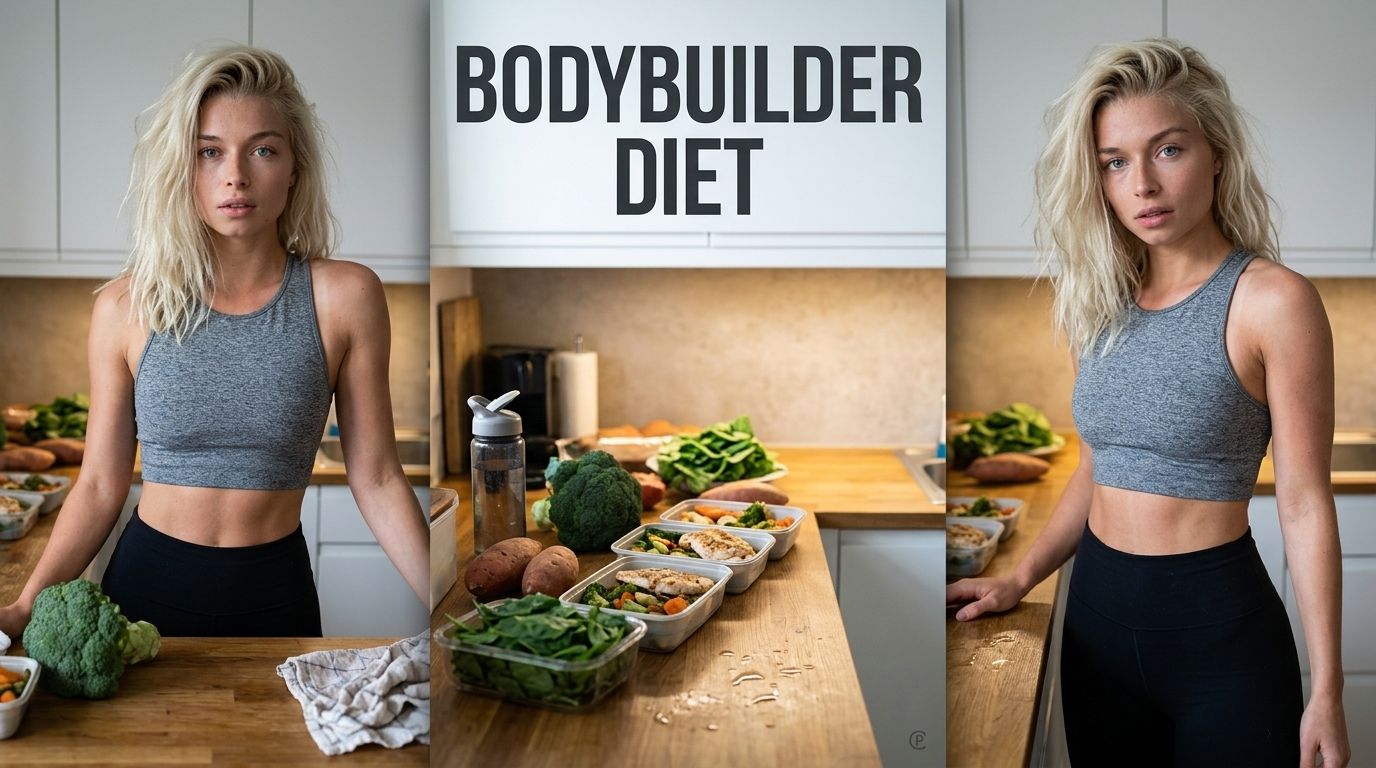
A typical bodybuilding day includes five to six balanced meals. Each meal contains 30 to 40 grams of protein, a complex carbohydrate source, and a vegetable. Our coaches at Optimal Weight Plan recommend meal prepping on weekends to simplify adherence during busy workdays when cooking time is limited.
Breakfast starts the day with protein and slow-digesting carbohydrates. Scrambled eggs with oatmeal or a protein smoothie with banana and oats delivers the morning macronutrient targets. A mid-morning snack of Greek yogurt with mixed nuts maintains amino acid availability until lunch.
Post-workout meals represent the highest calorie window of the day. A combination of fast-digesting protein (whey shake) and simple carbohydrates (rice cakes, fruit) immediately after training accelerates glycogen replenishment. A whole food meal follows within 60 to 90 minutes.
Steps to Build a Bodybuilding Meal Plan:
- Calculate total daily energy expenditure (TDEE) based on activity level
- Set calorie target: add 10-20% for bulking or subtract for cutting
- Divide calories into macronutrient targets (protein, carbs, fats)
- Split daily targets across five to six evenly spaced meals
- Assign a lean protein source, complex carb, and vegetable to each meal
- Prep meals in bulk on weekends to ensure consistency
How Do You Adjust Meals for Bulking and Cutting?
Bulking meals add carbohydrates and healthy fats to increase calories. Portion sizes grow for rice, potatoes, and pasta dishes. An extra tablespoon of olive oil or a handful of nuts adds 100 to 200 calories per meal without requiring entirely new food choices or recipes.
Cutting meals reduce carbohydrate portions while keeping protein constant. Protein intake stays at 1.6 to 2.2 grams per kilogram to protect muscle mass during the caloric deficit. Vegetables replace half the carbohydrate portion to maintain meal volume and satiety without the extra calories.
Want Your Free Weight Loss Action Plan from Our OPTAVIA Coaches?
You’ve got the knowledge. Now you need the structure. Our Independent OPTAVIA Coaches at Optimal Weight Plan build a free personalized action plan that balances muscle growth with sustainable fat loss. You’ll get customized macronutrient targets, meal timing strategies, and ongoing accountability from real coaches who’ve done it themselves.
Don’t leave your gains to guesswork. Our team at Optimal Weight Plan provides weekly check-ins, meal adjustments, and the kind of structured support that turns information into actual results. Get your free action plan and start with a structured weight loss program built for real progress.