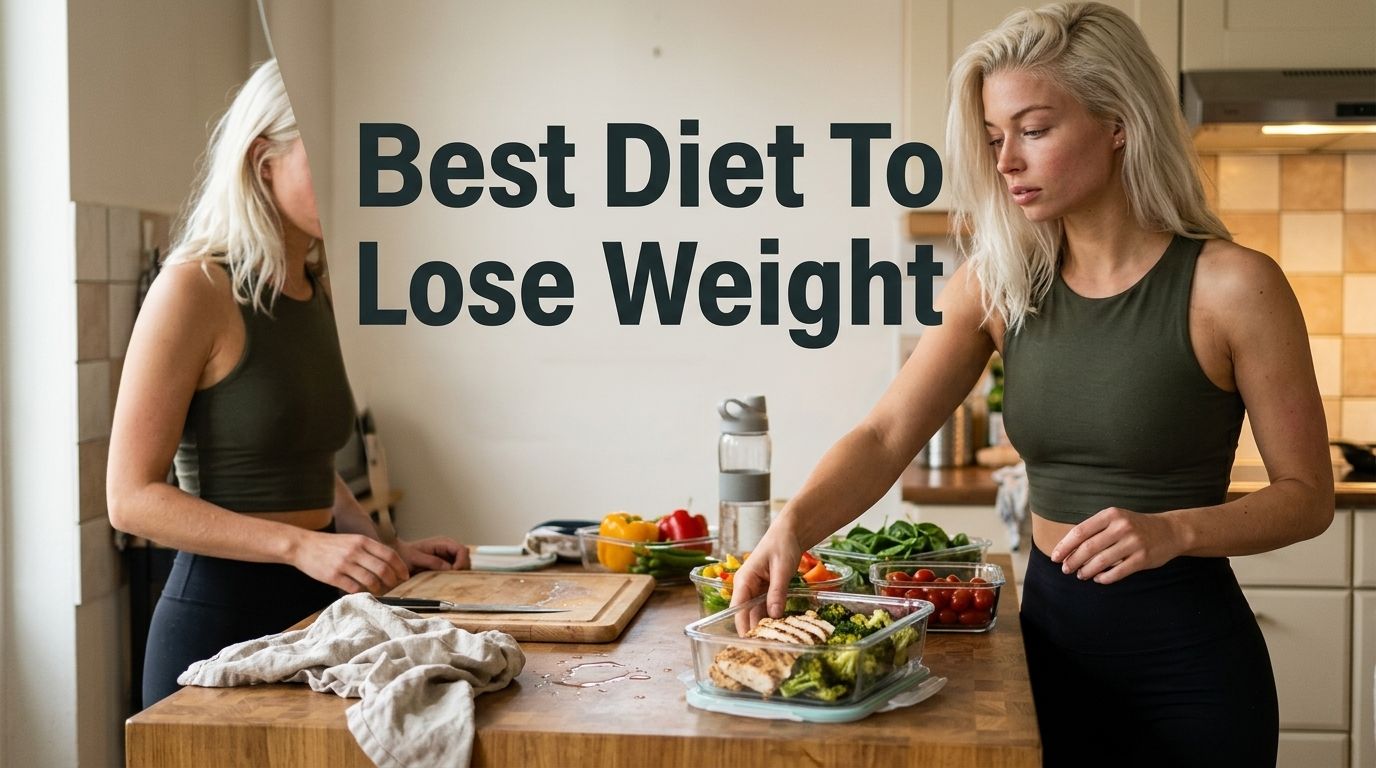
The best diet to lose weight is one you can maintain long-term, not the most restrictive option available. No single plan works for everyone. Research consistently shows that diet quality matters more than which specific macronutrient you cut. Whole foods, lean proteins, and vegetables form the foundation of every evidence-based approach.
The core mechanism behind every effective weight loss diet is a sustained caloric deficit. Low-fat, low-carb, high-protein, Mediterranean, and plant-based diets all produce results when total daily calories consistently fall below calories burned. The DIETFITS study found no significant difference between structured low-fat and low-carb approaches after one year.
This guide explains how the most researched weight loss diet types work, which approaches have the strongest evidence, how calorie targets vary by method, and what foods to prioritize for sustained results. Every recommendation connects to clinical trial data and systematic reviews from peer-reviewed journals.
What Is the Best Diet to Lose Weight?
The best diet to lose weight is the one you can follow consistently, not the most extreme one. No single diet works for every person. Research shows that creating a caloric deficit is the core mechanism behind all effective weight loss plans. Whole foods, lean proteins, and abundant vegetables form the foundation of every approach with lasting results.
The DIETFITS study randomized 609 overweight adults into healthy low-fat or healthy low-carb groups for one year. Both groups ate whole foods, avoided processed items, and reduced flour and sugar. Neither group produced significantly more weight loss. Diet quality and adherence explained the outcomes.
Trends like eliminating gluten, detoxing on juice, or eating only protein are not sustainable weight loss strategies. Simple changes that align with existing eating habits, cultural practices, and personal preferences produce better long-term adherence. Long-term adherence determines long-term weight loss success.
Does Diet Quality Matter More Than Calorie Counting?
Diet quality matters as much as total calorie intake for lasting, sustainable weight loss. High-quality diets built on whole, unprocessed foods naturally regulate appetite. Ultra-processed foods disrupt hunger hormones and drive overconsumption by up to 500 calories per day. Food quality shapes total calorie intake from the inside out.
Harvard researchers agree that the best diet contains nutritious whole foods, mostly plants, with minimal flour, added sugar, trans fats, and processed foods. This approach works regardless of whether you reduce fat or carbohydrates. Food quality determines how well the body responds to any calorie target.
Principles Shared by Every Effective Weight Loss Diet:
- A sustained caloric deficit — consuming fewer calories than you expend
- High intake of whole, minimally processed foods
- Adequate protein at every meal to preserve lean muscle mass
- High fiber intake to regulate hunger and satiety
- Minimal refined flour, added sugar, trans fats, and ultra-processed foods
- Physical activity to support energy expenditure and metabolic rate
Which Diet Is Most Effective for Long-Term Weight Loss?
The Mediterranean diet shows the strongest evidence for long-term weight loss and cardiometabolic improvement. A systematic review found it outperformed other dietary patterns across both measures consistently. It is nutrient-adequate, food-based, and centers on vegetables, healthy fats, fish, and legumes.
Plant-based diets also show strong results. A Physicians Committee study of 64 overweight women found that a low-fat plant-based diet produced an average 13-pound (5.9 kg) weight loss in 14 weeks without calorie counting or exercise. Participants maintained an 11-pound (5 kg) loss one year later.
How Does a Low-Calorie Diet Work for Weight Loss?
A low-calorie diet creates weight loss by maintaining a sustained daily energy deficit. Consuming fewer calories than the body expends forces it to draw on stored fat for fuel. A standard low-calorie diet (LCD) provides 1,000 to 1,200 calories per day for women and 1,200 to 1,600 for men. This range produces steady, safe weight loss.
Rapid weight loss triggers a strong hormonal response that slows metabolism and increases hunger. People who lose weight very quickly are more likely to regain it than those who lose it gradually. This hormonal adaptation is one reason why weight regain occurs when a strict diet is stopped or relaxed.
Meal replacements — formulas, shakes, soups, and bars — are commonly used in structured low-calorie diets to ensure nutritional completeness at reduced calorie levels. These allow precise calorie control without complex meal planning. An LCD using meal replacements alongside regular food is easier to follow than a very-low-calorie diet.
What Is the Difference Between LCD and VLCD?
A very-low-calorie diet (VLCD) provides as few as 800 calories per day, producing 3 to 5 pounds (1.4 to 2.3 kg) of weekly weight loss. A standard low-calorie diet (LCD) provides 1,000 to 1,600 calories per day for safer, sustained results. Both approaches produce comparable total weight loss over time. LCD is the better choice for most adults.
VLCDs use meal replacements like formulas, shakes, and soups to ensure nutritional completeness at severe calorie restriction. They are only recommended for adults with obesity requiring rapid weight loss for medical reasons. Most experts do not recommend VLCDs for more than 12 weeks. Medical supervision is required throughout VLCD use.
LCD vs. VLCD Comparison:
| Feature | LCD (Low-Calorie Diet) | VLCD (Very-Low-Calorie Diet) |
|---|---|---|
| Daily calorie target | 1,000–1,600 cal | Fewer than 800 cal |
| Weekly weight loss | 0.5–1.5 lb (0.2–0.7 kg) | 3–5 lb (1.4–2.3 kg) |
| Food type | Regular food and meal replacements | Mostly meal replacements |
| Who it suits | Most adults seeking weight loss | Adults with obesity, medical supervision only |
| Maximum recommended duration | Ongoing with adjustments | 12 weeks maximum |
What Are the Most Effective Diet Types for Weight Loss?
The most effective diet types for weight loss are low-carbohydrate, high-protein, Mediterranean, plant-based, and DASH approaches. A review of 53 studies covering 68,128 participants found low-carb diets produced significantly more weight loss than low-fat diets. High-protein diets increase satiety and help maintain weight loss long-term.
No single diet works best for every person. Biology, lifestyle, food preferences, and adherence capacity all shape which approach produces the best outcome. The Mediterranean diet ranks highest for long-term sustainability. Low-carb approaches rank highest for short-term weight loss speed and belly fat reduction.
Most Effective Diet Types for Weight Loss:
- Mediterranean diet — strongest evidence for long-term weight loss and metabolic health
- Low-carbohydrate diet — fastest initial weight loss, strongest belly fat reduction
- High-protein diet — best for satiety, muscle preservation, and weight maintenance
- DASH diet — effective for weight loss plus blood pressure and cardiovascular health
- Plant-based diet — strong long-term results without calorie counting in research trials
- Intermittent fasting — reduces total weekly calorie intake through time restriction
Is Low-Carb or Low-Fat Better for Weight Loss?
Low-carb diets produce faster initial weight loss and greater belly fat reduction than low-fat diets do. A review of 53 studies covering 68,128 participants confirmed this finding. Low-carb approaches reduce visceral belly fat that lodges around abdominal organs. They also improve blood triglycerides, HDL cholesterol, and blood pressure.
The DIETFITS study found no significant difference in total weight loss between well-structured low-fat and low-carb diets after one year when food quality was controlled. Both approaches work when adherence is high and whole foods replace processed ones. The distinction matters most in the first 3 to 6 months.
Low-Carb vs. Low-Fat for Weight Loss:
| Factor | Low-Carb | Low-Fat |
|---|---|---|
| Short-term weight loss | Faster initial results | Slower but steady |
| Belly fat reduction | Stronger effect | Moderate effect |
| Long-term (1 year) results | Similar to low-fat | Similar to low-carb |
| Blood triglycerides | Improves significantly | Moderate improvement |
| HDL cholesterol | Improves | Modest improvement |
Does a High-Protein Diet Help You Lose Weight Faster?
High-protein diets speed up weight loss by increasing satiety and preserving lean muscle mass. The target intake is 30% of total daily calories or 1 to 1.2 grams per kilogram (0.45 to 0.55 grams per pound) of ideal body weight. Higher protein intake suppresses hunger hormones more effectively than carbohydrate or fat calories.
High-protein diets from animal sources require caution for people at risk of chronic kidney disease. Plant-based protein sources like legumes, tofu, tempeh, and Greek yogurt deliver the satiety benefit with lower renal risk. Distributing protein evenly across three to four meals maximizes muscle preservation during weight loss.
Does the Mediterranean Diet Work for Weight Loss?
Yes. The Mediterranean diet works for weight loss and produces the strongest cardiometabolic improvements of any studied dietary pattern. A systematic review found it outperformed other dietary patterns across both measures consistently. It is nutrient-adequate and centers on vegetables, healthy fats, fish, and legumes.
The DASH diet also produces meaningful weight loss. An analysis of 13 studies found people on DASH lost more weight over 8 to 24 weeks than controls. A separate 12-week study found DASH reduced total body weight, body fat percentage, and absolute fat mass while preserving muscle strength.
What Makes the Mediterranean Diet Sustainable for Weight Loss?
The Mediterranean diet’s sustainability for weight loss comes from food quality and flexible eating patterns, not restriction. No food groups are fully eliminated. Olive oil, whole grains, legumes, fish, vegetables, and nuts are abundant and satisfying. Moderate poultry and dairy are included. Red meat is limited but not banned.
Foods that protect heart health almost entirely overlap with weight loss foods on the Mediterranean approach. Fiber from vegetables and legumes promotes satiety. Monounsaturated fats from olive oil extend fullness. This natural appetite regulation makes calorie control easier without deliberate restriction.
Does Intermittent Fasting Work for Weight Loss?
Yes. Intermittent fasting works for weight loss by creating a caloric deficit through time-restricted eating patterns. Reducing the daily eating window limits total calorie intake without requiring calorie counting. The 5:2 method, involving 2 low-calorie days and 5 normal eating days per week, produces rapid weight loss in clinical settings.
Animal and human studies show metabolic benefits from fasting beyond simple calorie restriction. These include improved insulin sensitivity, reduced inflammatory markers, and better blood sugar regulation. Intermittent fasting suits people who find meal frequency reduction easier than daily calorie counting.
The most popular intermittent fasting approaches include the 5:2 system, 16:8 time-restricted eating, and alternate-day fasting. All three produce weight loss by reducing total weekly calorie intake. Diets incorporating fasting cause rapid initial weight loss, though long-term results match those of continuous calorie restriction.
What Is the 5:2 Fasting Method?
The 5:2 fasting method involves 2 days per week of very-low-calorie intake and 5 days of normal eating. On fasting days, intake typically drops to 500 to 600 calories (2,092 to 2,510 kJ). On normal days, no calorie restriction applies. This structure creates a mild weekly caloric deficit without requiring daily dietary restraint.
The 5:2 method is one of several intermittent fasting variations with clinical support. Time-restricted eating limits daily food intake to a 6 to 10-hour window. Alternate-day fasting alternates between normal and near-complete fasting days. All three reduce total weekly calorie intake and improve insulin sensitivity.
Common Intermittent Fasting Methods for Weight Loss:
- 5:2 — 2 days of 500–600 calorie intake per week, 5 days normal eating
- 16:8 — eat within an 8-hour window, fast for 16 hours daily
- 14:10 — eat within a 10-hour window, fast for 14 hours daily
- Alternate-day fasting — alternate between normal eating and near-complete fasting days
What Foods Should You Eat to Lose Weight?
The foods most effective for weight loss are high-fiber vegetables, lean proteins, whole grains, legumes, and healthy fats. These foods produce satiety at lower calorie densities, regulate hunger hormones, and support muscle preservation during a deficit. Include protein at every meal. Aim for 5 or more vegetable portions daily.
Fiber is the most important nutrient for appetite management during weight loss. Plant-based diet research recommends targeting 40 grams of fiber per day from vegetables, fruits, whole grains, and legumes. High fiber intake slows digestion, blunts blood glucose spikes, and promotes fullness that prevents overeating.
Protein at every meal prevents the muscle loss that accompanies caloric restriction. Lean sources include chicken breast, fish, eggs, Greek yogurt, legumes, tofu, and tempeh. Each meal should provide at least 20 to 30 grams. This distribution preserves muscle mass more effectively than concentrating protein in one meal.
Best Foods for Weight Loss:
- Non-starchy vegetables — leafy greens, broccoli, cauliflower, bell peppers, cucumbers
- Lean proteins — chicken, fish, eggs, Greek yogurt, cottage cheese, legumes, tofu
- Whole grains — oats, barley, quinoa, brown rice, whole wheat
- Legumes — beans, lentils, chickpeas for fiber and protein combined
- Healthy fats — olive oil, avocado, nuts, seeds in moderate portions
- Fruit — berries, apples, pears in whole form for fiber and satiety
What Foods Slow Down Weight Loss?
The foods most likely to slow weight loss are ultra-processed products, refined flour, added sugar, and sugar-sweetened beverages. These foods disrupt hunger signals, provide low satiety per calorie, and drive overconsumption. Processed foods override the body’s natural appetite regulation, making a sustained caloric deficit very difficult.
Trans fats in packaged snacks and fried foods promote inflammation and interfere with fat metabolism. Alcohol supplies 7 calories per gram (29.3 kJ) without satiety or nutritional value. A glass of beer or wine adds approximately 150 calories. Cutting sugar-sweetened beverages alone removes a significant source of daily excess calories.
Foods to Limit When Trying to Lose Weight:
- Sugar-sweetened beverages — sodas, energy drinks, sweetened juices and coffees
- Ultra-processed snacks — chips, cookies, crackers, packaged convenience foods
- Refined grains — white bread, white rice, regular pasta, processed cereals
- Trans fats — fried fast food, packaged baked goods, margarine
- Alcohol — 150 calories per drink with no nutritional value or satiety benefit
- Added sugar — candy, pastries, sweetened dairy products, processed sauces
Want Your Free Weight Loss Diet Plan from Our OPTAVIA Coaches?
A free Optimal Weight Plan weight loss guide delivers a structured eating framework from Independent OPTAVIA Coaches. The guide maps your calorie targets, protein benchmarks, food lists, and meal timing across all the proven weight loss approaches. It builds on evidence from Mediterranean, high-protein, and plant-based diet research.
You have the research. Now you need the plan. Our coaches at Optimal Weight Plan help you identify which approach fits your lifestyle. If you want a structured weight loss program grounded in clinical nutrition evidence, this is it. No fads. No extremes. A plan built around what actually works.
What Does the Optimal Weight Plan Weight Loss Guide Include?
The Optimal Weight Plan weight loss guide includes a calorie target framework, protein targets, and food lists by approach. Weekly structure replaces guesswork with specific targets. Independent OPTAVIA Coaches at Optimal Weight Plan provide accountability. The guide adapts to food preferences, activity level, and health history.
It’s free and delivered directly to your inbox. You receive the same evidence-based weight loss framework our team at Optimal Weight Plan uses with clients every day. Start today and have your personalized weight loss roadmap within 24 hours.