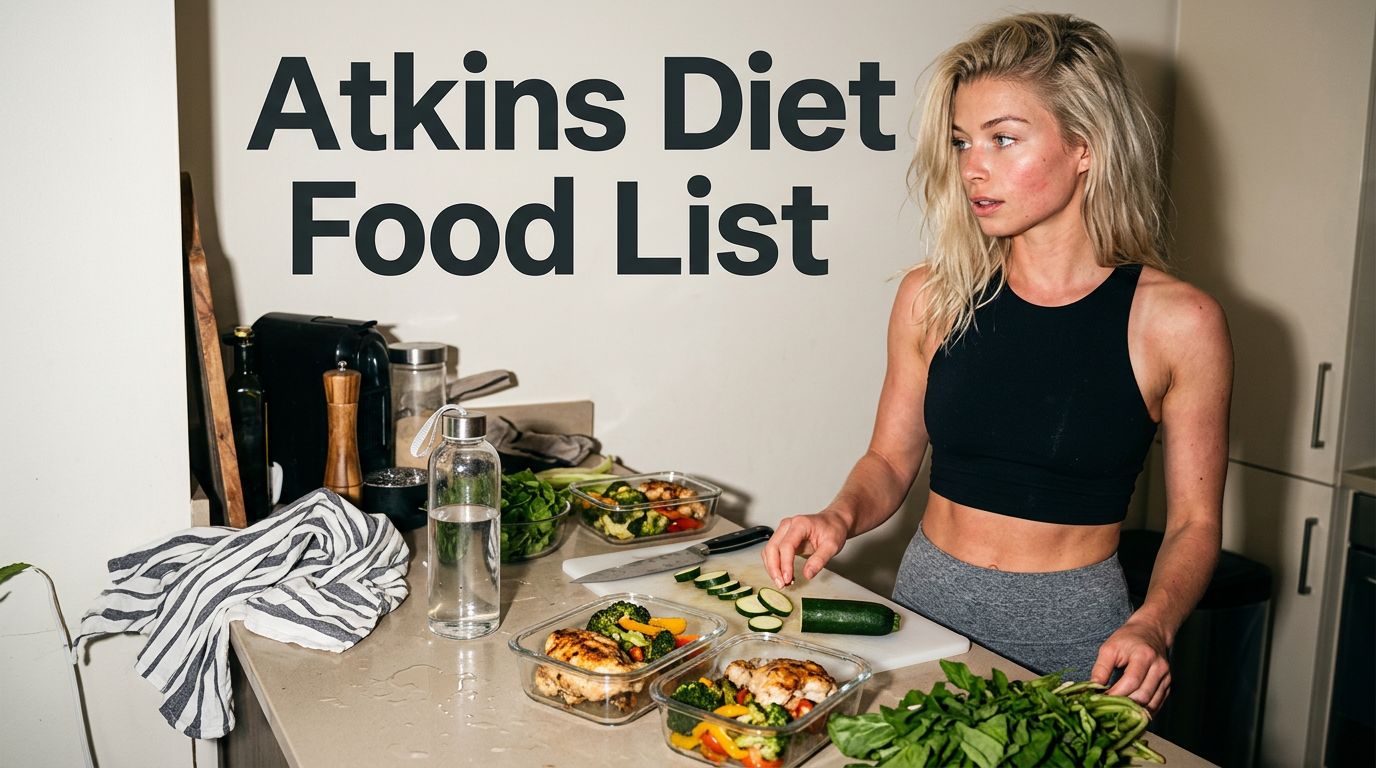
The Atkins diet food list is a structured low-carb eating framework built on four progressive phases. It works by limiting net carbs to trigger fat-burning ketosis, then reintroducing foods systematically as you approach goal weight. Understanding the list determines how fast and how sustainably you lose weight.
Proteins and fats are unrestricted on Atkins, while sugar, refined carbs, and starchy vegetables are banned in early phases. Net carbs equal total carbohydrates minus fiber, and that formula governs every food decision you make. Phase 1 starts at 20g net carbs daily and expands to 25-50g in Phase 2, then 50-80g in Phase 3, then a personal maintenance level in Phase 4.
This guide covers the full Atkins-approved food list by phase, how to calculate net carbs, how Atkins compares to keto, the most common mistakes that stall progress, and how vegetarians can adapt the plan. You’ll finish with a precise picture of what to eat, what to avoid, and why this low-carb system works.
What Is the Atkins Diet Food List and How Does It Work?
The Atkins diet food list is a structured low-carb eating framework. It divides foods into permitted and restricted categories across four progressive phases. Each phase adjusts net carb intake to guide the body through fat-burning adaptation. The food list is the foundation that determines how quickly you lose weight and how sustainable the plan becomes.
Here’s why it works: the Atkins diet restricts carbohydrates severely in early phases to trigger ketosis. Ketosis is a metabolic state where the body burns stored fat for fuel instead of glucose. Phase 1 limits net carbs to 20g daily, forcing this metabolic shift within two to four days. Fat and protein become the primary energy sources throughout the process.
So what makes certain foods Atkins-approved? Net carbs determine which foods appear on the list. Net carbs equal total carbohydrates minus dietary fiber. Fiber passes through the body without raising blood sugar, so it doesn’t count toward your daily limit. This formula makes high-fiber vegetables acceptable even when total carbs look high on the label.
What Foods Can You Eat Freely on the Atkins Diet?
Proteins on the Atkins diet are the most unrestricted food category. All meat, poultry, seafood, and eggs carry zero net carbs, making them the foundation of every meal. Chicken, beef, salmon, pork, bacon, shrimp, and eggs are all permitted without portion limits. Choosing fatty cuts of meat is encouraged because fat replaces carbohydrates as your primary fuel source.
Top Atkins-Approved Protein Sources:
- Beef (ground beef, ribeye, sirloin)
- Chicken (breast, thighs, drumsticks)
- Pork (chops, tenderloin, bacon)
- Salmon, tuna, shrimp, and other seafood
- Eggs (any preparation)
- Turkey (ground or sliced)
Foundation vegetables provide 12-15g of net carbs daily within the Atkins plan. Leafy greens, broccoli, asparagus, zucchini, cucumber, and spinach are the top choices. These vegetables deliver fiber, vitamins, and minerals without triggering blood sugar spikes. They form the base of salads, stir-fries, and side dishes throughout all four phases.
And here’s something people overlook: healthy fats and full-fat dairy are fully permitted. Olive oil, butter, avocado oil, coconut oil, and mayo with no added sugar are unrestricted. Hard cheeses like cheddar, Swiss, and Gouda are allowed up to 4 oz (113g) daily in Phase 1. Heavy whipping cream adds richness to coffee and recipes with minimal net carbs per serving.
Beverages on the Atkins plan center on water as the primary drink. Coffee and tea — unsweetened or with non-caloric sweeteners — are permitted freely. Diet sodas and sparkling water are acceptable in moderate quantities. Alcohol becomes an option from Phase 2 onward, limited to dry wine or spirits without sugary mixers.
What Foods Must You Avoid on the Atkins Diet?
Sugar and refined carbohydrates are banned across all four Atkins phases. White sugar, brown sugar, honey, maple syrup, bread, pasta, white rice, and processed grain products are off the food list permanently in early phases. These foods spike blood sugar rapidly and prevent the body from entering or maintaining ketosis. Reading labels is essential because sugar hides in sauces, dressings, and packaged foods.
Starchy vegetables are restricted in Phases 1 and 2 due to high net carb content. Potatoes, sweet potatoes, corn, carrots, peas, and beets can’t fit within the 20g daily net carb limit of Phase 1. These vegetables aren’t inherently unhealthy, but their carb density conflicts with early-phase Atkins goals. They reappear in Phase 3 and Phase 4 in measured portions.
High-sugar fruits are excluded entirely from Phase 1. Bananas, grapes, mangoes, pineapple, and watermelon contain 15-25g of sugar per serving, consuming the entire daily carb allowance. Small portions of berries like strawberries and blueberries may return cautiously in Phase 2. Most other fruits reenter the plan only in Phase 3 and Phase 4.
Legumes and grains follow a phase-dependent restriction schedule. Beans, lentils, chickpeas, and most grains are prohibited in Phases 1 and 2. Phase 3 allows small measured servings of legumes as carb tolerance increases. Whole grains return only in Phase 4 if you can tolerate them without stalling weight maintenance.
Foods to Avoid by Phase:
| Food Category | Phase 1 | Phase 2 | Phase 3 | Phase 4 |
|---|---|---|---|---|
| Sugar and refined carbs | Banned | Banned | Banned | Banned |
| Starchy vegetables | Banned | Banned | Limited | Moderate |
| High-sugar fruits | Banned | Berries only | Most fruits | All fruits |
| Legumes and beans | Banned | Banned | Limited | Moderate |
| Whole grains | Banned | Banned | Banned | If tolerated |
What Are the Four Phases of the Atkins Diet and How Do Foods Change?
The Atkins diet food list follows a four-phase progressive carb reintroduction structure. Phase 1 begins with the strictest restrictions at 20g net carbs daily. Each phase loosens those rules by adding 5g of net carbs weekly as the dieter approaches and then maintains goal weight. Phase 4 establishes a lifelong carb tolerance level that keeps weight stable without rigid counting.
Atkins Four-Phase Overview:
| Phase | Name | Net Carb Range | Duration | Goal |
|---|---|---|---|---|
| Phase 1 | Induction | 20g/day | Min 2 weeks | Trigger ketosis |
| Phase 2 | Balancing | 25-50g/day | Until 10 lbs from goal | Find carb tolerance |
| Phase 3 | Pre-Maintenance | 50-80g/day | Until goal reached | Slow weight loss |
| Phase 4 | Lifetime Maintenance | Personal tolerance | Lifelong | Sustain goal weight |
Phase 1, called Induction, lasts a minimum of two weeks and can be extended for faster results. The allowed foods are limited to proteins, healthy fats, foundation vegetables, and 4 oz (113g) of hard cheese daily. This strict phase triggers ketosis within two to four days for most people. Weight loss during this phase is typically the most rapid of the entire program.
Bottom line: Phases 2 through 4 expand the food list systematically. Each new phase adds previously restricted foods back in small increments. Nuts and berries enter in Phase 2, legumes and more fruit in Phase 3, and whole grains in Phase 4 if tolerated. This structure prevents rebound weight gain by teaching the body to handle more carbs as fitness improves.
What Can You Eat During Atkins Phase 1 Induction?
Phase 1 protein foods are entirely unrestricted in quantity. Beef, pork, chicken, turkey, fish, shellfish, and eggs carry zero net carbs and can be eaten at every meal. Fatty cuts like ribeye steak, chicken thighs, and salmon are preferred because fat provides satiety and fuel. This protein freedom is one of Atkins Phase 1’s most satisfying features for new dieters.
The vegetable allowance in Phase 1 is 12-15g of net carbs from foundation vegetables. Spinach, romaine lettuce, kale, broccoli, asparagus, cucumber, celery, and zucchini all fit this limit. A generous salad with leafy greens and above-ground vegetables easily fills the daily vegetable quota. These choices provide fiber, potassium, and vitamins while keeping net carbs controlled.
Phase 1 dairy is limited but present. Up to 4 oz (113g) of hard cheese like cheddar, Swiss, or mozzarella is permitted daily. Small amounts of heavy whipping cream — no more than 2-3 tablespoons — can be added to coffee or recipes. Soft cheeses like ricotta and cottage cheese are excluded in Phase 1 due to higher carb content.
And fats? In Phase 1, they’re unrestricted and actively encouraged. Olive oil, coconut oil, avocado oil, butter, and no-sugar-added mayo are all approved. These fats replace the energy lost from eliminating carbohydrates. Cooking with generous amounts of fat helps maintain energy levels and reduces hunger between meals during induction.
Phase 1 Atkins Shopping List Essentials:
- Eggs (2-3 dozen)
- Ground beef (80/20 blend) and chicken thighs
- Salmon fillets or canned tuna
- Bacon (check label for no added sugar)
- Spinach, romaine, and broccoli
- Cheddar and Swiss cheese
- Olive oil, butter, and heavy whipping cream
- Avocados
How Does the Food List Expand in Phases 2, 3, and 4?
Phase 2, called Balancing, reintroduces nuts, seeds, and berries to the food list. Net carb intake increases to 25-50g daily, adding 5g per week. Almonds, walnuts, pecans, sunflower seeds, and nut butters return in small measured portions. Strawberries, blueberries, and raspberries become acceptable in half-cup servings per day as carb tolerance builds.
Phase 3, called Pre-Maintenance, allows beans, lentils, and a wider range of fruits. Net carb intake rises to 50-80g daily as the dieter comes within 10 pounds (4.5 kg) of their goal weight. Chickpeas, black beans, and kidney beans enter in half-cup portions. Apples, peaches, and oranges return in Phase 3 when consumed in single-serving amounts.
Phase 4, Lifetime Maintenance, establishes each person’s critical carbohydrate level. This is the highest daily net carb intake that allows you to maintain goal weight without regaining. Whole grains like oats, quinoa, and brown rice may enter the food list if you tolerate them without weight gain. Phase 4 is a personalized food strategy, not a universal one.
What Are Net Carbs and Why Do They Matter for the Atkins Food List?
Net carbs are the digestible carbohydrates that raise blood sugar. The Atkins food list is built on net carbs, not total carbs, because fiber passes through the digestive system without entering the bloodstream. Subtracting fiber from total carbohydrates gives the carb count that actually affects blood sugar and insulin levels. This distinction makes many high-fiber foods acceptable on Atkins that would otherwise seem too carb-heavy.
Here’s the thing: net carbs determine whether a food belongs on the Atkins-approved list. A food with 10g total carbs and 7g fiber has only 3g net carbs, qualifying it for Phase 1. Without understanding net carbs, dieters may unnecessarily restrict nutritious vegetables or accidentally consume too many carbs from processed foods. Net carb awareness is the skill that separates successful Atkins dieters from those who struggle.
To be clear: tracking net carbs daily keeps the body in the fat-burning state required for Atkins weight loss. Exceeding the daily net carb limit pulls the body out of ketosis and switches fuel back to glucose. Staying at or below the phase-specific limit maintains ketone production and consistent fat metabolism. Consistent tracking matters more than perfection on any single meal.
How Do You Calculate Net Carbs on the Atkins Diet?
The net carb formula is a simple two-step subtraction. Take total carbohydrates from the Nutrition Facts panel, then subtract dietary fiber. The result is net carbs per serving. For foods containing sugar alcohols like erythritol or xylitol, subtract half the sugar alcohol grams as well, because they have a partial effect on blood sugar.
Short answer: read the label, find total carbs, find fiber, subtract. That’s the whole system. Locate the serving size first, then check total carbohydrates and dietary fiber beneath it. The difference gives net carbs for that specific serving. Many people make errors by not adjusting for actual portion size compared to the listed serving.
Net Carb Comparison: Common Atkins Foods:
| Food (per 100g / 3.5 oz) | Total Carbs | Fiber | Net Carbs | Phase 1 OK? |
|---|---|---|---|---|
| Broccoli | 6g | 2g | 4g | Yes |
| Avocado | 9g | 7g | 2g | Yes |
| Strawberries | 8g | 2g | 6g | No (Phase 2+) |
| Almonds | 22g | 13g | 9g | No (Phase 2+) |
| Sweet potato | 20g | 3g | 17g | No |
| Spinach | 4g | 2g | 2g | Yes |
How Does the Atkins Diet Food List Compare to the Keto Diet?
The Atkins and keto food lists share the same low-carb foundation but diverge in structure. Both eliminate sugar, grains, and starchy vegetables in early phases. The critical difference is that keto maintains strict macro ratios permanently (70% fat, 25% protein, 5% carbs), while Atkins increases carb intake progressively across four phases. Atkins is designed as a transitional system; keto is designed as a permanent metabolic state.
Atkins vs Keto: Key Differences:
| Feature | Atkins Diet | Keto Diet |
|---|---|---|
| Net carbs | 20g (Phase 1) to personal limit | 20-50g permanently |
| Fat requirement | High fat encouraged, not mandated | 70% fat strictly required |
| Protein limit | No upper limit | Moderate to prevent gluconeogenesis |
| Carb reintroduction | Yes, phased system | No, permanent restriction |
| Long-term flexibility | Higher (Phase 4 personal tolerance) | Lower (fixed macros) |
In fact, Atkins offers more food flexibility as phases progress. Keto keeps net carbs below 20-50g daily indefinitely to sustain ketosis. Atkins Phase 4 can allow 100g or more of net carbs daily depending on individual tolerance. This flexibility makes Atkins more accessible for people who want a long-term carb reintroduction roadmap rather than permanent strict restriction.
Protein rules differ significantly between the two plans. Does keto allow unlimited protein? No. Keto moderates protein intake deliberately to prevent gluconeogenesis, the process where excess protein converts to glucose. Atkins places no upper limit on protein in any phase, making it easier to build and preserve muscle mass. This difference makes Atkins more compatible with active lifestyles and strength training programs.
Is the Atkins Diet Safe and What Side Effects Should You Expect?
The Atkins diet is safe for most healthy adults when followed with adequate hydration and electrolyte support. Short-term side effects in weeks one and two include fatigue, headache, brain fog, and irritability. These symptoms are collectively called the keto flu and occur as the body transitions from burning glucose to burning fat. Most people move through this adaptation phase within five to seven days.
The bad news? Electrolyte loss drives the majority of keto flu symptoms. When glycogen stores deplete, the kidneys release stored water along with sodium, potassium, and magnesium. Replenishing these electrolytes through food or supplements reduces symptom severity significantly. Salted broth, avocado, leafy greens, and magnesium supplements are practical solutions during the induction phase.
How to Reduce Keto Flu Symptoms:
- Drink at least 8 cups (1.9 liters) of water daily
- Add extra salt to food or drink salted bone broth
- Eat potassium-rich foods like avocado and spinach
- Take a magnesium glycinate supplement (200-400mg daily)
- Avoid strenuous exercise for the first week
Certain groups should avoid the Atkins diet without medical supervision. Pregnant or breastfeeding women, people with kidney disease, and individuals on insulin or other diabetes medications face specific risks from severe carb restriction. Anyone with a history of disordered eating should consult a healthcare provider before starting. The high saturated fat content of some Atkins-friendly foods warrants monitoring for individuals with cardiovascular risk factors.
The good news? Long-term safety data on low-carb diets is generally positive for most adults. Research shows improvements in blood sugar, triglycerides, and HDL cholesterol after sustained carb restriction. Studies lasting two years or more find no significant safety concerns in healthy individuals following Atkins-style plans. The key factor is food quality: prioritizing whole proteins, non-starchy vegetables, and healthy fats over processed low-carb products.
What Common Mistakes Do People Make With the Atkins Food List?
Hidden carbs in processed foods are the most common reason people stall on Atkins. Sauces, salad dressings, flavored yogurts, and even ‘low-carb’ packaged products often contain added sugars that push net carbs above the daily limit. Tomato ketchup has 4g net carbs per tablespoon. A single tablespoon of balsamic vinegar adds 3g net carbs. Reading every label, every time, is non-negotiable on the Atkins diet.
Why do so many people quit Atkins early? Insufficient water intake is a major culprit. Low-carb diets have a natural diuretic effect because glycogen binds to water and is released when carbs are restricted. The body needs at least 8 cups (1.9 liters) of water daily to compensate. Dehydration worsens fatigue, headaches, and constipation during induction, making many people quit before adaptation is complete.
Skipping electrolyte replenishment amplifies every early side effect. Sodium, potassium, and magnesium losses are significant in the first weeks of Atkins. Adding extra salt to food, eating potassium-rich vegetables like spinach and avocado, and taking a magnesium supplement prevents the fatigue and muscle cramps that derail new dieters. Many people blame the Atkins diet itself for symptoms caused entirely by electrolyte deficiency. Our team at Optimal Weight Plan sees this pattern repeatedly with new dieters.
Miscounting net carbs on labels derails progress even for experienced Atkins followers. Serving size is the most overlooked variable. A bag of nuts listed at 2g net carbs per serving adds up to 10g if you eat five servings. Sugar alcohols require an additional calculation step. Building the habit of checking serving size before calculating net carbs prevents consistent overcounting errors.
Most Common Atkins Mistakes and How to Fix Them:
- Eating hidden carbs in sauces and dressings: read every label
- Skipping water: drink minimum 8 cups (1.9 L) daily
- Ignoring electrolytes: salt food, eat avocado, supplement magnesium
- Miscounting net carbs: always check serving size first
- Trusting ‘low-carb’ labels without verifying: calculate yourself
Can Vegetarians Follow the Atkins Diet Food List?
Vegetarians can follow the Atkins diet food list using eggs, cheese, and plant-based proteins as the foundation. Lacto-ovo vegetarians have the broadest options, combining eggs, hard cheeses, Greek yogurt (strained for lower carbs), tofu, tempeh, and seitan. These protein sources provide adequate amino acids without relying on meat or fish. Phase 1 is achievable for lacto-ovo vegetarians with careful meal planning around these staples.
Can vegans do Atkins? It’s harder, but it’s possible. Vegans face greater challenges because most plant proteins carry some carbohydrates. Tofu, tempeh, edamame, seitan, nuts, seeds, and avocado become the primary protein and fat sources. Nutritional yeast adds protein and B vitamins without significant net carbs. Vegan Atkins requires precise tracking to avoid exceeding daily carb limits while meeting protein targets. Our coaches at Optimal Weight Plan can help design a workable vegan variation on request.
Vegetarians typically start the Atkins plan at 30g net carbs daily rather than the standard 20g. Plant-based proteins like tofu and tempeh contribute a small amount of carbohydrates that meat and eggs do not. This slightly higher starting point still triggers metabolic adaptation while accommodating the realities of a vegetarian food list. Vegetarian Atkins is more flexible in Phase 2 and beyond as the carb ceiling rises.
Ready to Get Your Custom Atkins-Style Eating Plan From Our Optimal Weight Plan Coaches?
You have the food list. You understand the phases, the net carbs, and the mistakes to avoid. Now you need a plan built around your body, your schedule, and your goals. Don’t waste weeks figuring it out alone. Our Independent OPTAVIA Coaches at Optimal Weight Plan put together a free, personalized low-carb action plan, sent directly to your inbox. No guessing. No starting from scratch. Just a clear, phase-by-phase food roadmap designed for real, lasting results. Reach out today and get your free plan.